The rise of AI-generated CVs, fake portfolios, real-time interview assistants and deepfake identities is making employers extra keen to verify that the person on the screen is the one they are hiring and possesses the skills they claim to have.
The use of AI in job applications goes beyond candidates, as employers are also turning to the technology to make recruitment faster.
In Kenya, recruiters are using AI-powered application tracking systems to screen CVs against job descriptions, shortlist candidates, and reduce the amount of manual work involved in sifting through applications.
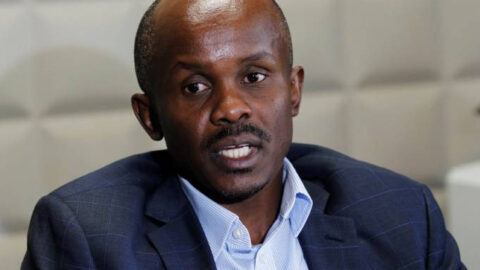
“AI has become useful in narrowing large pools of applicants to candidates whose qualifications match what an employer is looking for in the job descriptions we put out,” Nairobi-based HR specialist and recruitment consultant John Awuor told the Business Daily.
But the same technology that helps employers process applications faster is also giving job seekers tools to optimise their applications, sometimes beyond their actual abilities.
A 2025 report by US technology and consumer reporting company Checkr, based on a survey of 3,000 managers involved in hiring, said 59 percent suspected a candidate of using AI to misrepresent themselves through resumes, interviews or other communications.
For employers, 62 percent said job seekers are now better at using AI to fake their identities than hiring teams are at detecting them.
Some candidates are using AI to generate work samples and portfolios, while others are turning to synthetic voices, deepfake video and fake identity documents to impersonate someone else.
“Thirty-one percent have interviewed a candidate who was later revealed to be using a fake identity, while 35 percent say someone other than the listed applicant has participated in a virtual interview,” the study said.
AI-generated responses during live or recorded interviews are also an emerging concern as remote recruitment has made it harder to detect them.
In these cases, companies risk hiring someone who does not have the qualifications they claimed, creating potential compliance and security problems, while the recruitment process itself consumes time and money.
Managers also pointed out a reputational risk of hiring someone who subsequently performs poorly or proves unsuitable for the role.
Mr Awuor said AI-generated CVs and cover letters are currently among the most common forms of AI-assisted misrepresentation he is seeing in Kenya.
Candidates can feed a job description into an AI tool and generate an application tailored almost perfectly to the requirements.
“The problem becomes apparent when they are asked to explain the contents themselves,” he says. “We are seeing cases of candidates not being able to take you through their CV like it is their own during the first introductory questions of the interview.”
The recruiter says AI assistance itself is not necessarily the problem – a candidate using AI to improve the grammar, structure or presentation of an application may still accurately represent their skills.
He argues that the line is crossed when the technology begins inventing experience, qualifications or competencies that the applicant cannot demonstrate.
“There is room for using AI to assist you in polishing your application, but how much you let it do and how much of it is true is where recruiters will catch you if you’re honest about your skills and competencies,” Mr Awuor said.
For virtual interviews conducted over video calls, Mr Awuor recalls a recent case where a candidate appeared to be running interview questions through an AI system in real time and using the generated responses to answer him.
“It failed because the responses did not demonstrate the candidate’s own understanding or fit for the role,” he says, “because a keen recruiter can distinguish between a generic AI-generated response and an answer that reflects the candidate’s experience and personality.”
As a result, some recruiters are combining virtual interviews with physical meetings and introducing unconventional techniques to verify that the person being interviewed is genuine.
These can include asking candidates to make simple physical movements such as clapping or jumping, or switching between languages during an interview.
“The idea is to introduce spontaneous elements that are harder for a pre-programmed system or deepfake (AI-generated or altered image, video, or audio recording) to anticipate,” Mr Awuor said.
A recent Wall Street Journal report quoted instances during virtual interviews where some candidates are also asked to take down their Zoom backgrounds and pan the camera around the room to prove that they are an actual person.
Recruiters have also recommended more practical assessments, live problem-solving exercises, follow-up questions, in-person interviews, and verification of qualifications and previous work to help candidates communicate their genuine abilities.