A bitter dispute between Tata Chemicals Magadi Ltd and the Kenyan government has put a Sh3.62 billion expansion of the soda ash plant in doubt, threatening an investment that aimed to more than triple annual production.
The project, announced in October 2024, was expected to raise soda ash output to one million tonnes from about 300,000 tonnes, while adding a 10-megawatt solar plant and upgrading processing, storage and railway infrastructure.
Construction was scheduled to start in the third quarter of 2025, with the expanded plant expected to be operational by mid-2027.
Instead, less than two years after the investment was announced, Tata is fighting a government shutdown of its mining operations, a Sh17.45 billion claim by Kajiado County and several regulatory and environmental disputes that now threaten its future in Kenya.
The confrontation has turned the planned expansion into a test of whether Kenya can demand greater local value from its mineral resources while retaining investors prepared to commit billions of shillings to long-term projects.
The Kenya Chamber of Mines said the dispute was being watched by investors and financiers in Kenya and abroad, making its resolution important for the country’s investment reputation.
“The manner in which the Magadi matter is being handled and ultimately resolved is being closely watched by investors and financiers, both locally and globally,” the chamber said.
The lobby said the case would become a reference point in assessing Kenya’s regulatory predictability and attractiveness as a destination for long-term investment.
Tata has maintained that it has complied with requirements raised by the Ministry of Mining and is awaiting the government’s response.
In a regulatory statement to investors on India’s National Stock Exchange and BSE Limited, Tata Chemicals said it submitted all required information, reports and documentation on August 11.
“We wish to reiterate that on August 11, 2026, TCML submitted all the required information, reports and documentation, and TCML is fully compliant with the regulatory requirements,” the company said.
Tata said it had provided a comprehensive response to the ministry’s concerns and was waiting for its review and further direction.
“We respect the authority of the Government of Kenya and remain committed to constructive engagement through the appropriate legal and regulatory channels to resolve the outstanding matters,” it said.
The statement came after President William Ruto publicly called for Tata to leave Kenya and said the government would bring in another company to develop the Magadi resource.
The President said the replacement investor would be required to establish glass and chemical manufacturing plants in Kajiado, raising the stakes beyond mining to industrialisation agenda.
Tata is fighting to protect its century-old operation, while the government wants Kenya to get more value from the resource.
Mining Cabinet Secretary Hassan Joho has argued that Kenya should no longer allow trona, the mineral from which soda ash is produced, to be extracted and exported without sufficient processing and local value addition.
The government has also raised concerns over local procurement, community integration and skills transfer, arguing that Tata should create stronger links with Kenyan businesses and transfer more high-level technical jobs to citizens.
Royalty reconciliations and alleged export underreporting have added to the dispute, while environmental concerns surrounding Lake Magadi have generated separate legal challenges.
On July 28, the Ministry of Mining suspended Tata’s extraction operations over compliance and licensing concerns, including what it considered an inadequate modern mineral beneficiation strategy.
Tata subsequently moved to the High Court seeking orders to halt the shutdown, arguing that the decision was causing massive financial losses.
The court declined to suspend the decision, noting that implementation had already begun and that the parties had agreed during a July 29 meeting that the suspension would remain in force.
The main compliance case is due for mention on October 6, leaving the company’s operating future uncertain as the government considers a replacement investor.
The regulatory fight is running alongside a separate land and royalty dispute with Kajiado County, which is demanding Sh17.45 billion from Tata for alleged arrears covering 2013 to 2018.
The claim relates to about 224,000 acres leased by Tata. The county argues that the company occupies extensive ancestral Maa land while using less than 15 percent of the area.
Tata has challenged the demands in courts.
An appellate court ruled in October 2025 that the county’s claims under its Finance Act were arbitrary and unconstitutional, but the dispute has since moved to the Supreme Court.
On June 19, 2026, the Supreme Court allowed the critical county motion, leaving Tata exposed to a potentially substantial liability.
The combination of the mining suspension, county claim and political pressure has now derailed Tata’s investment timetable which it made public late 2024.
The proposed project was designed not simply to increase soda ash output but to expand the infrastructure supporting the Magadi operation.
Tata planned a 10-megawatt solar plant to supply power to the expanded facility, alongside larger dredgers, new storage silos and additional grinding and screening equipment.
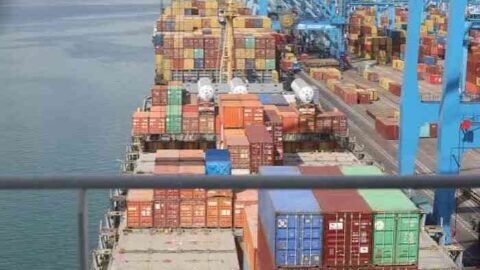
The company also planned bulk loading and bagging facilities and an upgrade of the railway linking Magadi with Mombasa to handle higher export volumes.
“TCML will continue using rail for transport of their product to the Mombasa port. Due to the increased production, the rail system will be upgraded to accommodate the increased traffic flow,” Tata said when announcing the project.
The expansion was also timed to take advantage of growing global demand for soda ash, which increased by 2.7 percent, equivalent to 1.8 million tonnes, in 2023.
China was the main driver of the growth, while demand from automotive, construction and solar glass industries was expected to support further consumption.
The planned larger Magadi operation targeted to increase export earnings, renewable energy investment and stronger industrial infrastructure around one of the country’s oldest mining operations.
That opportunity is now overshadowed by the fight over how the resource should be developed.
Kenya exported 254,779.6 tonnes of soda ash worth Sh7.36 billion in 2025, down from Sh11.88 billion in 2022, according to the latest Economic Survey.
The average value earned per tonne also fell to Sh28,908 last year from Sh47,550 in 2023, indicating lower prices and Kenya’s limited ability to capture more value from the mineral despite its long production history.
The government wants to reverse that trend by requiring an investor to move beyond mineral extraction into manufacturing.
Ruto’s proposed replacement operator would be expected to maintain soda ash production while establishing glass and chemical plants, potentially creating more jobs and retaining a larger share of the mineral’s value within Kenya.
But the government has yet to disclose the identity of a replacement investor or the value and timelines of the proposed manufacturing projects.
The Chamber of Mines supports the push for greater beneficiation, employment, skills development and stronger participation by Kenyan businesses.
It has, however, warned that these should be pursued within the Constitution, the law and predictable regulatory processes.
“Greater beneficiation, regulatory compliance and the preservation of existing productive investment are not mutually exclusive objectives,” the chamber said.
It said Kenya could secure greater value from its minerals while preserving and expanding productive investment, employment, industrial capacity and established markets.
The dispute raises a question beyond the future of Tata’s Magadi operation for potential investors, testing how established investments are treated when government priorities change and disputes over regulation, land and royalties remain unresolved.
The financial stakes are particularly significant in mining, where investors commit large amounts of capital upfront and depend on long operating periods to recover their investment.
Tata has also pointed to its contribution to surrounding communities, including a subsidised rail service between Magadi and Kajiado, student scholarships, healthcare services and water supplies to households in the arid area.
The Magadi operation dates back to 1911 and has passed through Brunner Mond and Imperial Chemical Industries of the UK before India’s chemical giant took over. Tata acquired the business in December 2005 and formally renamed it Tata Chemicals Magadi Limited the following year.