— Experts seek African digital trust framework
By Olasunkanmi Akoni
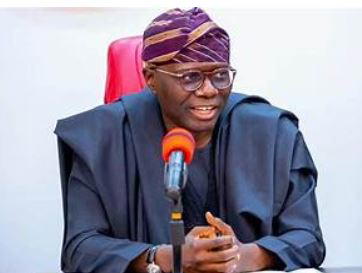
LAGOS — Lagos State Governor, Babajide Sanwo-Olu, has expressed confidence that the state will emerge not only as Nigeria’s commercial capital but also as Africa’s innovation capital, with more than $80 billion in commitments to technology development.
Sanwo-Olu spoke on Wednesday at the GITEX Nigeria Official Tour, themed, “Beyond Connectivity: The Bridge to Sovereign AI & Innovation,” held at Landmark Centre, Victoria Island, Lagos.
The governor, who was represented by his deputy, Dr Obafemi Hamzat, said the ambition would not be achieved through mere declarations but through sustained investment in infrastructure, talent development, progressive policies and effective execution.
He said the evidence of Lagos’ growing innovation and economic strength was already compelling, noting that the state was currently the seventh-largest economy in Africa and larger than most countries on the continent.
“Our ambition is clear: we want Lagos recognised not only as Nigeria’s commercial capital, but as Africa’s Innovation Capital. A position like that cannot be declared. It has to be earned — through infrastructure, talent, policy and execution.
“The future economy is not something Lagos is waiting to join. It is something Lagos has already started building.
“We have produced unicorns in fintech, logistics and e-commerce — companies that began as ideas in Yaba and now serve millions across multiple markets,” he said.
Sanwo-Olu said artificial intelligence would fundamentally transform the way people work, learn, create, govern and conduct business.
He, however, warned that Africa must not approach the transformation merely as a consumer of technologies developed elsewhere, urging the continent to become a builder and owner of technology.
“But Africa cannot approach this transformation as a consumer of technologies built elsewhere. We must become builders. We must become owners.
“That means talent — but it also means computers, data infrastructure, research institutions and commercial models that keep value on this continent instead of exporting it,” he said.
Highlighting some of the achievements of his administration, the governor said Lagos had strengthened the foundation for its digital economy, revealing that about 3,000 kilometres of fibre-optic infrastructure had been laid between 2019 and 2025 as part of efforts to achieve a 6,000-kilometre unified network.
On electricity, which he described as a major constraint to productivity, Sanwo-Olu said the state had taken legal, regulatory and commercial steps to address the challenge, including plans to secure between 200 and 400 megawatts of state-procured electricity capacity.
He urged investors and global technology companies to look beyond selling products and services in Lagos and instead establish operations, engineering capacities, data centres and regional headquarters in the state.
“So to the investors here: bring us your capital and your confidence. Do not look at Lagos as a market of 20 million people. Look at Lagos as a launchpad into Africa.
“The opportunity is not in selling to Lagos. It is in building from Lagos, and exporting from Lagos,” he said.
Also speaking, Secretary-General of the African Continental Free Trade Area (AfCFTA) Secretariat, Ghana, Wamkele Mene, said Nigeria was playing a leading role in advancing Africa’s digital economy through its participation in the development and implementation of the AfCFTA Protocol on Digital Trade.
Mene said Nigeria, alongside Kenya and South Africa, was a co-champion of digital trade, adding that the country’s leadership was underpinned by its growing technology and fintech ecosystem and a vibrant generation of entrepreneurs whose products and services were reaching markets across Africa.
“With Nigeria’s growing pool of technology talent and innovative enterprises, the initiative is expected to help convert digital innovation into commercial value, strengthen regional supply chains and accelerate the emergence of a truly integrated African digital market,” he said.
Earlier, Chief Executive Officer, GITEX Global, Trixie LohMirmand, said the technology exhibition sought to connect Nigeria to the world and bring the world into Nigeria.
She said Nigeria had moved from policy formulation to implementation, adding that with more than $80 billion in commitments to technology, the task before GITEX was to convert the momentum into tangible opportunities, sustainable businesses and measurable economic impact, particularly in Nigeria and Africa.
LohMirmand recalled the strong participation of Nigerian delegations at GITEX in previous years, saying their involvement had provided a bridge for young Nigerians to interact and network with some of the world’s leading investment funds, technology executives and companies.
Also, the Director-General of the National Identity Management Commission (NIMC), Dr Abisoye Coker-Odusote, said the Federal Government had identified digital trust as critical to building a secure and interconnected African digital economy and accelerating Nigeria’s ambition of becoming a $1 trillion economy.
She stressed the need to develop local expertise in cryptography, cybersecurity and resilient digital infrastructure while preparing for emerging challenges posed by artificial intelligence and quantum computing.
Coker-Odusote called for the development of an African digital trust framework, expanded capacity-building programmes and practical cross-border digital use cases to transform the continent’s digital ambitions into concrete economic opportunities.
Similarly, the Director-General and Chief Executive Officer of the National Information Technology Development Agency (NITDA), Kashifu Abdullahi, said Nigeria’s growing pool of young talents must be supported with the right skills, infrastructure and enabling environment to develop innovative solutions to the country’s real-world challenges.
The post $80bn digital economy: Sanwo-Olu eyes Africa’s innovation capital appeared first on Vanguard News.