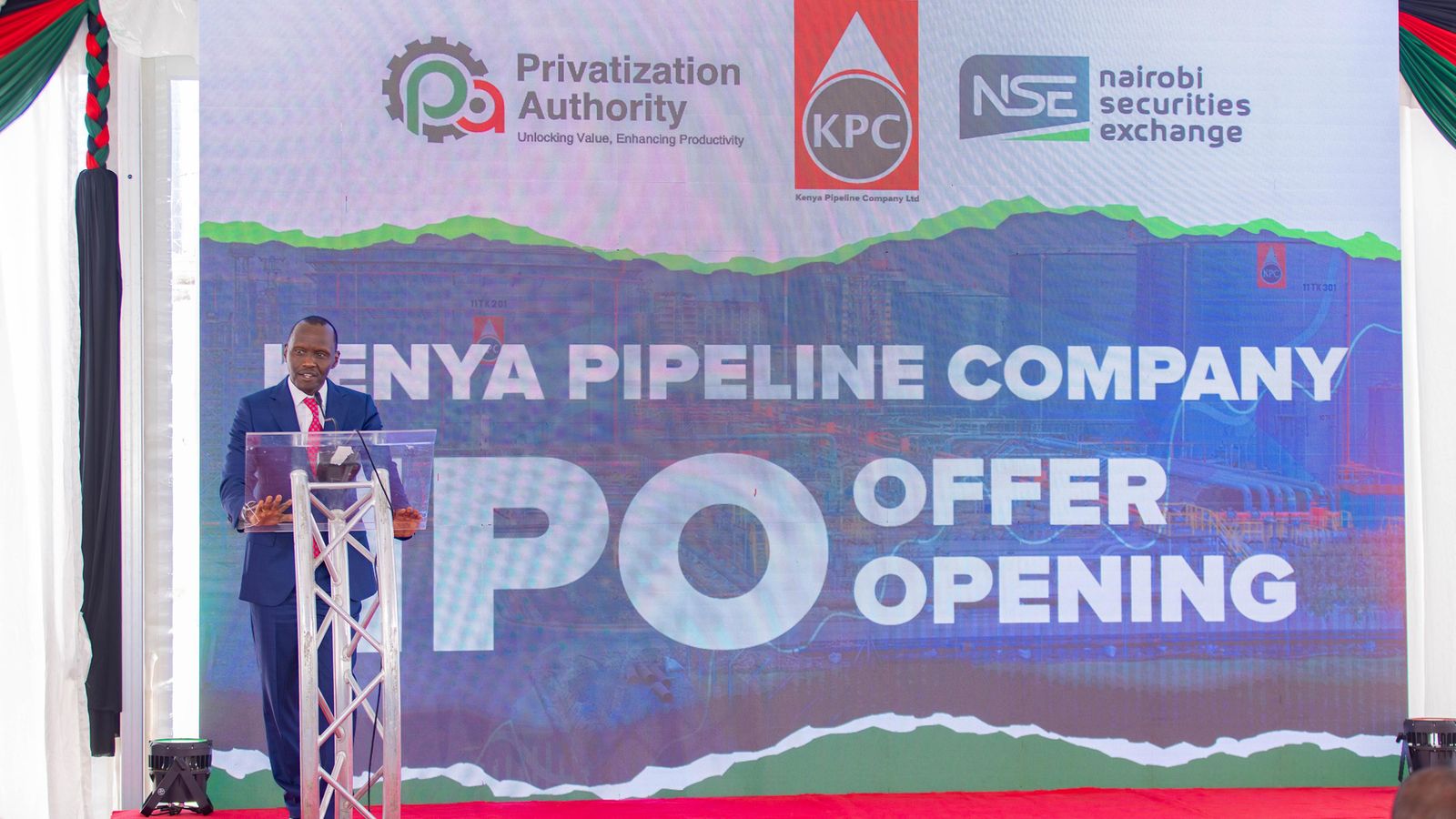
The State pressured cash-rich parastatals to buy into the initial public offering of Kenya Pipeline Company (KPC) to avoid the sale being declared invalid after high net worth investors snubbed the deal.
Multiple people familiar with the transaction, including CEOs of parastatals and stockbrokers, reckon that the government used “strong-arm” tactics to coerce the State-owned firms to participate in the IPO.
The offer risked collapse after investors bought less than 10 percent of the Sh103.6 billion worth of shares, days to the closure of the offer, striking fear in government.
Four of the sources reckon that attention turned to parastatals, the State-backed pension scheme and the Ugandan government to save the IPO from collapse.
The IPO had to raise at least Sh53.1 billion from more than 250 investors for it to proceed, a target that has not been achieved as the offer raced to a close.
“There was tacit order from above to buy the KPC shares. We had not planned, but we bought,” said a CEO of a top parastatal who sought anonymity.
Similar comments were echoed by a bond dealer who saw State-backed funds and parastatals selling bonds in February to get cash for the IPO.
“They were told to participate in the IPO and they needed to raise cash quickly in February,” said the bond trader. “In February, they were very active in the bond and equities market selling to get funds for KPC.”
The government priced the Kenya Pipeline IPO at Sh9 per share for the offer that opened on January 19 and ran until February 24, with the shares opening trading on the Nairobi bourse on March 9.
At the end of it, Uganda, together with 13 State-backed pension schemes and agencies, pumped in Sh95.8 billion of the required Sh106.3 billion, according to confidential documents seen by the Business Daily.
National Social Security Fund (NSSF) bought shares worth Sh36.3 billion, followed by Uganda (Sh33 billion), Public servants pension scheme (Sh12.3 billion), County workers pension fund (Sh3.4 billion) and Unclaimed Financial Assets Authority (Sh3.2 billion).
National Social Security Fund (NSSF) bought shares worth Sh38.5 billion, followed by Uganda (Sh33 billion), Public Servants Pension Scheme (Sh13 billion), County Workers Pension Fund (Sh3.6 billion) and Unclaimed Financial Assets Authority (Sh3.2 billion).
Pension funds for Kenya Power, KPC and Kenya Ports Authority (KPA) workers also participated heavily in the offer.
Business Daily was unable to get an immediate comment from the Treasury.
The offer received a 105.7 percent subscription rate, raising Sh112 billion against the State target of Sh106 billion.
Without the NSSF, Uganda and the pension fund, the IPO would have collapsed on failure to hit the success level.
About 90 percent of the top owners of KPC Plc bought their shares through proxies during the firm’s IPO, keeping the identity of the investors anonymous.
Regulatory filings show that 18 of the top 20 shareholders of KPC are under nominee accounts.
Nominee accounts are registered to hold shares on behalf of the true owners, a structure used globally and at firms listed at the Nairobi bourse to conceal the identity of beneficial owners.
NSSF and the state agencies also split their stake under several nominee accounts, masking their position as KPC’s largest shareholders.
The success of the offer was dented by the apathy among foreigners, high net worth investors in the private sector, retail investors and oil marketers, who many believed considered Kenya Pipeline a strategic investment.
Local retail investors bought shares worth Sh4.1 billion against their allocation of Sh21.2 billion stocks while foreigners spent a measly Sh32.7 million compared to their target of Sh21.2 billion.
Oil marketers took shares worth Sh22.9 million or 0.14 percent of the Sh15.9 billion stocks allocated to the dealers who rely on the pipeline to feed the market.
The lead transaction adviser—Faida Investment Bank—received a Sh1.16 billion fee windfall for the success of the IPO despite the private sector snubbing the offer.
A success fee is a performance-based commission paid out to an underwriter or advisor upon the successful closing of a deal, incentivising them to market the transaction.
Besides the Sh1 billion bonus, Faida was also paid Sh98.6 million for acting as lead transaction advisor, and also banked additional millions through placement fees that were paid per broker depending on the value of IPO shares they process.
The cumulative placement fees are capped by law at 1.5 percent of the offer size, meaning the 22 stockbrokers and investment banks enlisted to handle the sale shared a maximum of Sh1.59 billion in such fees.
The lead advisor is also responsible for preparing the issuer on how to meet the Capital Markets Authority’s continuous listing requirements after joining the bourse.
The information memorandum showed that the government planned to spend a total of Sh3 billion in fees on the IPO, excluding the conditional success fee to be paid to Faida.