Musician and artist Liboi says that fashion is an extension of her music and identity. Her bold, earthy and slightly ethereal style blends traditional African influences with contemporary silhouettes, textures and unexpected details. She enjoys looking distinctly African while being contemporary, playful and expressive.
Behind many of her looks is her sister, Beverline Ashioya, founder of Afabri Designs. Their creative partnership emanates from their upbringing, cultural identity and an intimate understanding of each other.
“Fashion is an extension of my music and my identity. It gives me another language to communicate who I am, where I come from and how I see the world, even before I sing a note,” she says.
Liboi says that she realised that the way she dresses could be part of her artistic expression because she always had an instinct for it. She became more intentional about it as she grew into herself as an artist. She realised that the way she presents herself can have as much meaning as the music.
Her style has evolved with her music. Earlier on, she says, I was mostly figuring out what she liked; now I think more about what a look communicates and how it connects to the music, the performance and the story she is telling.
Her music and fashion influence each other. Sometimes a song creates a visual world that informs what she wears, while at other times a fabric, texture or silhouette sparks an entire visual idea for her music.
“I want people to feel that I am deeply connected to my roots but not confined by them. I want my style to communicate freedom, confidence, softness and a willingness to explore what it means to be African today,” she says.
Her inspiration comes from African cultures, traditional dress, nature, textures, old photographs and the women she grew up seeing around her. She is drawn to earthy tones, rich colours, natural fabrics, statement jewellery, headpieces and pieces that feel handcrafted or carry a story.
“I love mixing unexpected things, something traditional with something modern, or something structured with something soft,” she says.
She adds that she is inspired by artists who understand that their visual identity is part of their storytelling. She is also most inspired by African women, the way they dress, carry themselves, adorn themselves and make everyday clothing feel powerful.

The one fashion piece that she feels most represented her is a beautiful statement piece of African jewellery.
“I love jewellery that feels ancestral, sculptural and intentional. It can completely transform how I feel in an outfit. Plus, I generally love jewellery. They are like the cherry in the cake,” she says.
Liboi says that working with Beverline, her sister, was a natural choice for her. Growing up together, she believes that Beverline knows her beyond her as an artist; therefore, she trusts her to bring that understanding into how she presents herself.
“She understands that I’m many things at once. I can be bold and playful, but I can also be very soft and introspective. She knows how to bring those different sides of me into a look without making me feel like I’m playing a character,” Liboi says.
Their creative process starts with a feeling or an idea, after which the two experiment with colour, texture, shape and accessories until the look feels right. However, they don’t always agree.
“Sometimes she sees something in a look that I don’t immediately see, and other times I’m very clear that something is absolutely not happening. But that back-and-forth is part of what makes the process fun,” she says.
Liboi says that she is very involved in choosing her outfits. She usually has a feeling or an idea of what she wants, and then they experiment with the pieces until something feels like her.
Beverline says styling her sister differs from styling another artist because she knows the person behind the artist. This allows her to challenge Liboi more and experiment with her looks.
She describes Liboi’s style as Afrocentric, rooted in African culture, history and contemporary expression. That aligns with Afabri Designs’ focus on using fashion to celebrate and preserve African culture while fostering cross-cultural conversations.
When creating a look, Beverline considers Liboi’s identity; the story she wants to tell; the performance, the event and the venue; as well as fabric, comfort and wearability. She also considers whether a piece can be styled differently and worn on any day based on how it’s styled.
“Her music influences the looks that I create for her. The looks have to, scripturally in terms of the storyline, visually and emotionally make sense to her first as a person, then as an artist, and finally to us, consumers of her art,” Beverline says.
She sees no need to balance Liboi’s personal taste with her creative vision, as the two complement each other. For her, contemporary style is a conversation between African and Western aesthetics.
Her approach draws on African heritage, music culture, strong feminine silhouettes and the sisters’ upbringing, blending these influences into fashion reimagined for the modern world.
Her favourite look that she has created for Liboi is a piece that she wore during her Whispers of Power Nairobi and Kisumu tour.

One of Beverline’s favourite creations for Liboi is a white jumpsuit and cape that she wore during her Whispers of Power Nairobi and Kisumu tour. The outfit was made from linen, with sisal fibre used as trims.
“Life had just dealt me some of its blows, and it was around this time that I was doing some introspection on where I wanted to be not only as a designer but also as an individual,” she says.
She adds that the linen and sisal properties that stood out to her the most were durability and moisture absorbency to represent resilience.
When they have disagreements over outfits, though they say these are rare. Most happen during the consultation stage, when they are still trying to communicate their ideas.
They resolve them through sketches and photo references that help them visualise what each person has in mind.
Their relationship as sisters makes the process easier and more intimate than a conventional stylist-artist relationship.
“There’s some level of intimacy that would rarely happen in a conventional stylist-artist relationship. I understand her personality and the things that make her feel like herself,” Beverline says.
At the same time, Liboi gives her sister room to challenge her visually. She makes their work be a conversation between who she is privately and who she’s becoming publicly, by revealing the artist that’s already there as opposed to just creating a character for her.
Beverline says that Liboi’s style communicates that she is a grounded artist who understands where she comes from, both as an artist and as an individual. Her philosophy is captured in the Swahili saying “Mwachapublicly by mila ni mtumwa” — a reminder of the importance of staying connected to one’s culture.
She wants people to be proud of and embrace their roots when they see Liboi’s fashion.
“Kitenge or kanga doesn’t make it African any less than our daily experiences because there’s more in the fabric of our daily lives,” she says.
Some of their most memorable work together has been created around Liboi’s debut album, HATUA. Liboi says that the looks created for the album stand out because they became a visual representation of the record and the different sides of her as an artist. The project also brought together Beverline and other creatives, such as Koincidence by Kuisun, Gishishii and House of Tway, to build the album’s visual world.
Liboi explains that their partnership has changed the way she understands fashion. She sees it as another form of storytelling instead of what looks good.
“On a normal day, I’m all about comfort,” she says. “But when it comes to my brand, I’ve learnt that sometimes my opinion doesn’t matter as much,” she says.
The sisters say their collaboration has strengthened their relationship. They spend time together, create, disagree, laugh and eventually arrive at something that feels like both of them.
The creative partnership has also taught them to listen to each other. Liboi says that Beverline understands her in ways she does not always understand herself, while Beverline has learnt that her sister can be exacting when she has a clear vision.
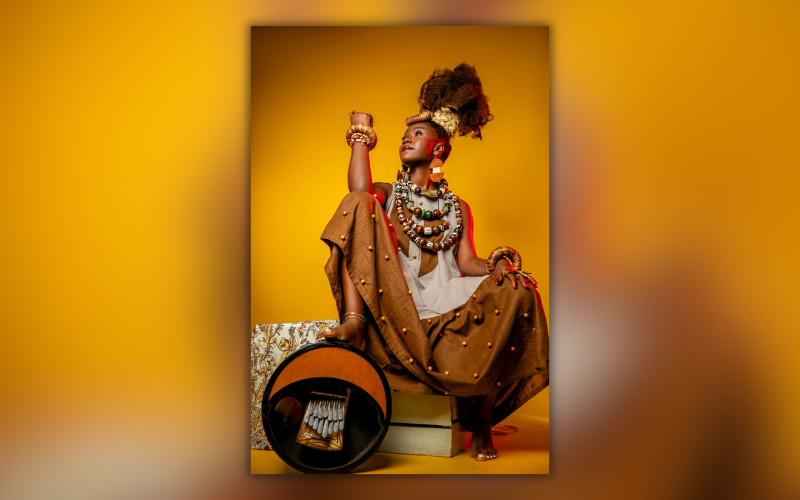
Beverline says that Liboi’s style communicates that she is a grounded artist who knows where she is coming from as an artist and an individual.
They say that what makes Liboi’s style distinctly hers is the combination of African identity, boldness, softness and mystery. There is something unexpected in the clothes, but the looks are grounded in her identity and cultural roots.
“I’d love for us to eventually create something really theatrical, something that feels almost like stepping into another world, while still being deeply African and rooted in our culture,” Beverline says.
They hope that their collaboration could grow beyond individual outfits into a larger visual world that explores fashion, culture, music and storytelling together and creates looks that feel intentional, memorable and unmistakably theirs.
“We’d also love to keep building on the cultural sundowners we’ve been having, where we fuse fashion and music and create a space for people to experience both alongside different cultural expressions,” Liboi says.
Photos: Courtesy; Liboi, dressed by her sister Beverline Ashioya of Afabri Designs