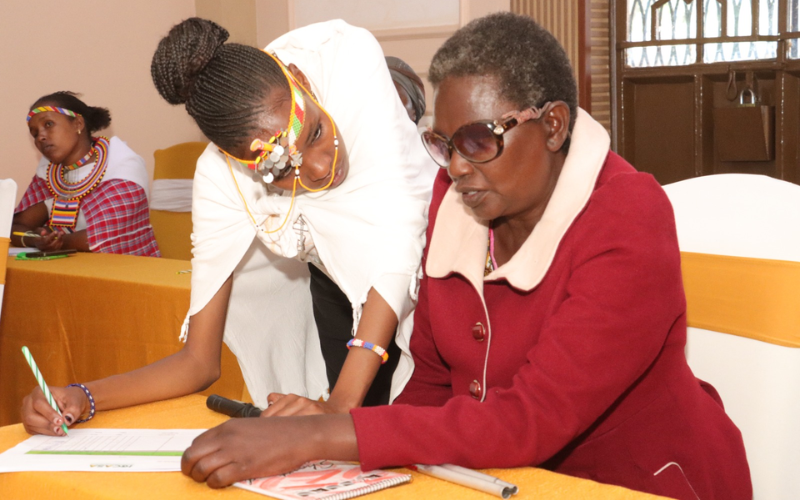
When 25 women gathered in Maralal for a one-day climate action workshop, the conversation quickly moved beyond rising temperatures, prolonged droughts and changing weather patterns.
Instead, the women asked a more fundamental question: Who gets to make decisions when communities respond to climate change?
For Indigenous women living with disabilities in Samburu County, the answer has often been painfully clear: not them.
However, that narrative is beginning to change.
The workshop, organised by Kimunyak Differently Abled Initiative (KDAI) with support from the Inclusive Climate Change Adaptation for a Sustainable Africa (ICCASA) through the Strengthening the Voices of Women with Disabilities to Actively Participate in Climate Change Policy and Negotiations (STREVOW) project, sought to change that reality.
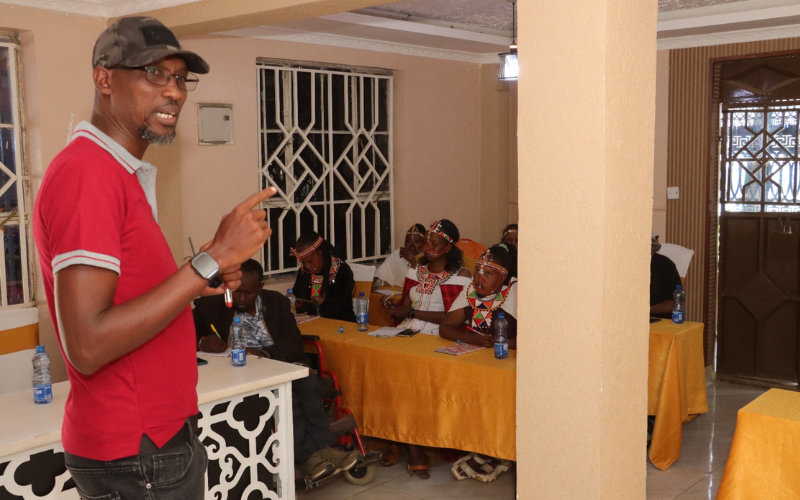
The session brought together women living with disabilities, local facilitators and climate experts to explore climate policy, governance structures and the role women with disabilities can play in shaping local and national climate action.
Participants examined Kenya’s Climate Change Act, county climate governance structures and mechanisms through which communities can influence climate planning and implementation.
Demanding representation
Leading the technical sessions was Samburu County Environment Officer John Jamaica, who explained the links between human activity, natural resources and climate change.
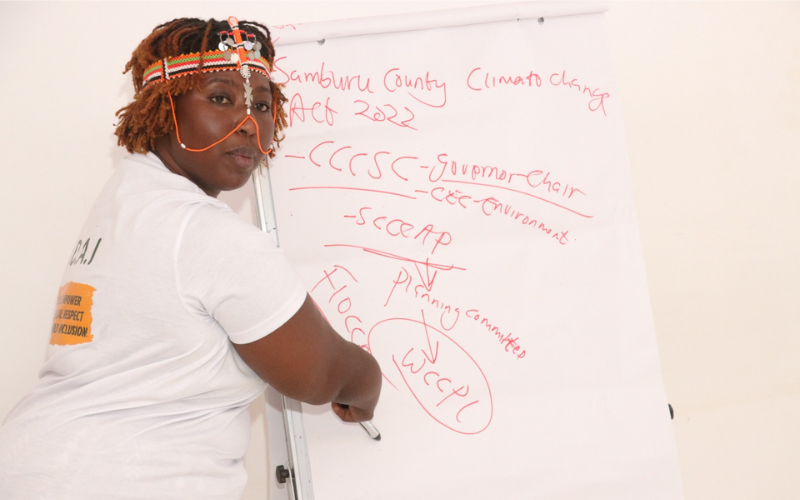
He said resources such as water, forests and energy are interconnected and must be protected for future generations. Human activities, including deforestation and harmful emissions, have disrupted natural systems and accelerated climate change.
Jamaica also introduced participants to the concept of climate justice, emphasising the need to include groups that have historically been excluded from decision-making.
“Women, persons with disabilities and other special groups must have their voices heard at both local and national levels,” he told participants.
The message resonated with the women, many of whom said they had experienced exclusion from leadership and governance structures.
Florence Ntisai, Founder and Executive Director of KDAI, said women with disabilities in Samburu have for years been left out of leadership structures despite legal provisions requiring their inclusion.
“In leadership, both at county and community levels, women with disabilities have been left out. In some instances, to demonstrate compliance, individuals without disabilities have been listed to occupy positions reserved for persons with disabilities,” she said.
Evelyn Lekiriao, a KDAI member, challenged what she described as a persistent pattern of tokenism.
“Women with disabilities continue to be overlooked in county governance structures and climate-related committees,” she said.
The remarks sparked an animated discussion, with some participants questioning whether people listed as disability representatives genuinely represented the interests of persons with disabilities.
Others said many women remain unaware of existing opportunities to participate in climate governance.
Jamaica urged organisations such as KDAI to be more vigilant in monitoring disability leadership positions and ensuring that those claiming to represent persons with disabilities are accountable to the communities they serve.
“It is your responsibility to know who is serving in those positions and whether they are effectively representing your interests,” he said.
He added that accountability is particularly important when organisations seek funding for climate-related programmes, as many donors require evidence that projects comply with legal and policy frameworks on inclusion and representation.
“Without meaningful participation, organisations risk being excluded from funding opportunities,” he noted.
“It is personal”
For Ntisai, the issue goes beyond policy.
“It is personal,” she said, urging women with disabilities in Samburu and beyond to reject passivity and become active in their communities.
She called on them to know one another, identify opportunities for representation and advocate for positions that rightfully belong to persons with disabilities.
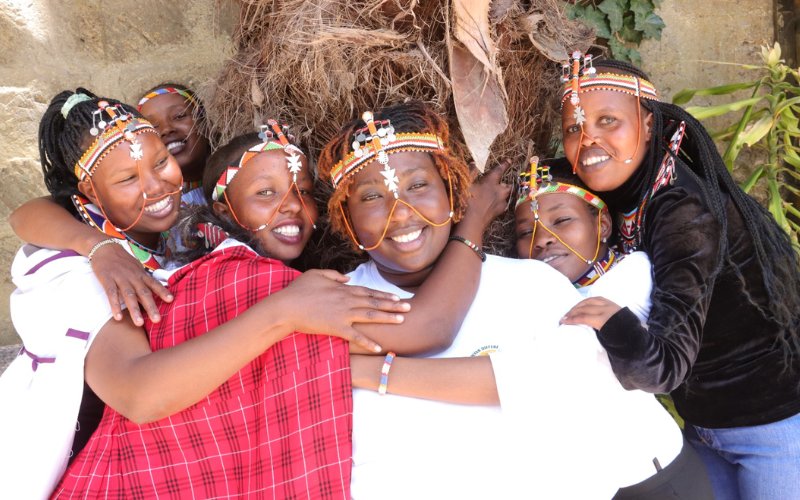
“You cannot objectively represent the concerns of persons with disabilities if you do not recognise yourself as part of that community, and there is need for us to come together and show our faces so that we are not taken for granted,” she said.
Ntisai also urged participants to familiarise themselves with climate change issues, noting that many women with disabilities remain unaware of their rights despite being particularly vulnerable to the effects of climate change.
Her message was reinforced by a cultural lesson. In Kisamburu, the word “Kimunyak” means love.
According to KDAI treasurer Stella Lesiilo, women with disabilities must support one another and build networks capable of challenging long-standing stereotypes.
“Cultural beliefs that portray disability as a curse continue to shape attitudes in some communities, and these perceptions often result in social exclusion, stigma and limited access to education, employment and leadership opportunities,” Lesiilo said.
Jamaica noted that climate change compounds these challenges, with prolonged droughts, heatwaves, water scarcity, food insecurity and livestock losses continuing to threaten livelihoods in Samburu.
“Women with disabilities are often disproportionately affected because they already face barriers to mobility, access to information and participation in community planning,” he said.
From victims to climate actors
For workshop participant Angelicah Mumbi, the discussions reflected her own experiences.
After an accident left her with a disability, she encountered the prejudice faced by many persons with disabilities. She said society often fails to recognise that disability can affect anyone.
“I am grateful for this training because it has brought us together to discuss our challenges and find solutions, and I believe women with disabilities must become more vocal in demanding representation in climate forums,” she said.
Mumbi said without representation, the experiences and indigenous knowledge of women with disabilities would remain absent from policy discussions.
That concern lies at the heart of STREVOW.
“Women with disabilities are among the groups most vulnerable to climate-related shocks, yet they remain largely absent from climate policy discussions,” said Faith Gikunda, Programmes Director at ICCASA.
She said the STREVOW project, funded by the Africa Climate Change Fund, seeks to address that imbalance by equipping women with disabilities with skills in climate policy, advocacy, public speaking, leadership development and peer mentorship.
The goal, she said, is to shift perceptions of women with disabilities from being victims of climate change to recognised actors in developing climate solutions.
Gikunda said the programme has already transformed Ntisai’s journey and that of other women across Samburu and East Africa.
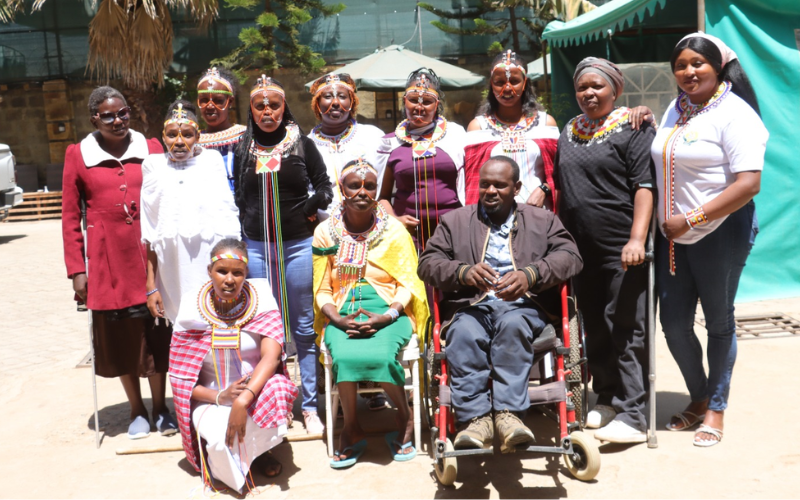
As the workshop came to an end, participants gathered for a group photograph. Some stood with the support of walking aids, while others sat in wheelchairs. Many wore traditional Samburu beadwork.
Together, they represented more than the conclusion of a training session. They represented a growing movement for inclusion.
For decades, climate conversations have focused on rainfall, carbon emissions and environmental degradation. In Maralal, however, another reality emerged: climate action without inclusion leaves entire communities behind.
For the women of KDAI, the message was unmistakable. Their place is no longer on the margins. It is at the climate table.