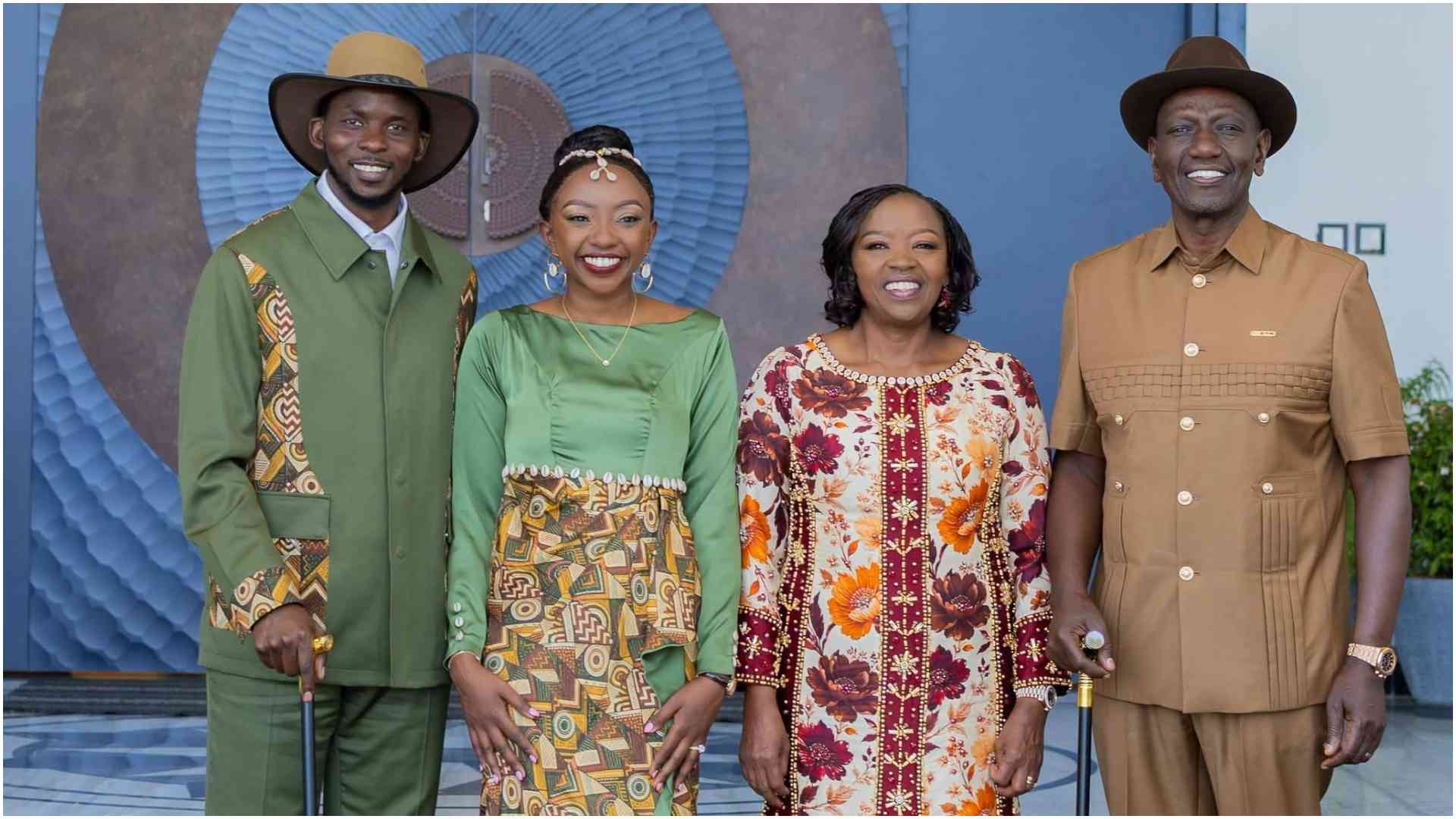
On Saturday, August 8, 2026, President William Ruto’s daughter, Charlene Ruto, held a traditional Kalenjin engagement ceremony known as Koito with her fiancé, Tanzanian tech entrepreneur Isaya Yunge.
The event, hosted at the family’s Intonna Heritage Farm in Kilgoris, Narok County, drew senior politicians, businesspeople and regional guests, quickly becoming one of the most talked about social events in East Africa.
The atmosphere was filled with joy, colour and warm smiles as Kenya’s First Daughter, took a major step into a new chapter of her life. Family members, close friends and well-wishers, gathered to celebrate her engagement in a ceremony that blended modernity with tradition.
President William Ruto’s rural home and farm in Kilgoris, Narok County, which is normally used as a rural retreat and working farm, was temporarily turned into a mini airport as helicopters carrying invited guests touched down.
Social media posts and videos showed a fleet of high-specification helicopters. Alongside the aircraft were a fleet of high-end luxury cars, creating a spectacle of a royal marriage.
From the beautiful decorations to the elegantly dressed guests, every detail reflected the importance of the special occasion. The event was not only a celebration of Charlene and her fiancé, but also a moment for two families to come together and share new beginnings together.
With excitement in the air, the bride-to-be appeared radiant as she celebrated the beginning of her journey towards marriage, in a ceremony that was closely followed by many Kenyans who were left in awe.
The rare occasion offered a glimpse into the private life of First Family, and more so, Charlene on her Koito day.
Koito, sometimes referred to “Koito ak Chaik” is a traditional Kalenjin rite that marks the formal engagement of a couple before any church or civil wedding. It is not just a party; it is a cultural process where the two families meet to negotiate bride price, exchange gifts and receive blessings from elders, officially signaling that the two households are joining.
During Koito, the groom’s family visits the bride’s home and elders from both sides play a central role in recognising the relationship and guiding the couple.
The ceremony is celebrated with traditional attire, music, dancing and food, making culture as much a part of the day as the couple themselves.
For the Kalenjin community, Koito is a key step that preserves identity, strengthens family ties and passes customs to the next generation.

National symbolism
In Charlene’s case, the ceremony also carried national symbolism: it showed a member of the First Family embracing tradition at a time many young people are moving away from such fundamental practices.
Charlene appeared in two main looks during the Koito festivities: a striking green outfit and a coordinated brown gown that matched Isaya’s suit. The earth‑toned, traditional‑inspired fashion reflected both modern style and Kalenjin cultural aesthetics.
After the event, some social media users began questioning the green dress, with some saying it did not look formal enough for a president’s daughter. Charlene later addressed the issue on Instagram, explaining that her original gown “did not work out” and that she had to rely on a last‑minute rescue.
She credited Nairobi-based designer House of Zippy for delivering a replacement dress within a day. Charlene said the designer had promised years earlier to make her wedding dress, adding that her love and dedication helped save the day. The outfit change was therefore not a fashion whim, but a last-minute switch that helped avert a wardrobe mishap.
African innovator
Yunge, is a 36-year-old Tanzanian internet entrepreneur and social innovator best known as the founder and Chief Executive Officer of SomaApps Technologies.
His flagship product, SomaApp, is reportedly a mobile platform that matches underprivileged African students with scholarships and educational opportunities worldwide, helping thousands of young Africans access higher education and skills training.
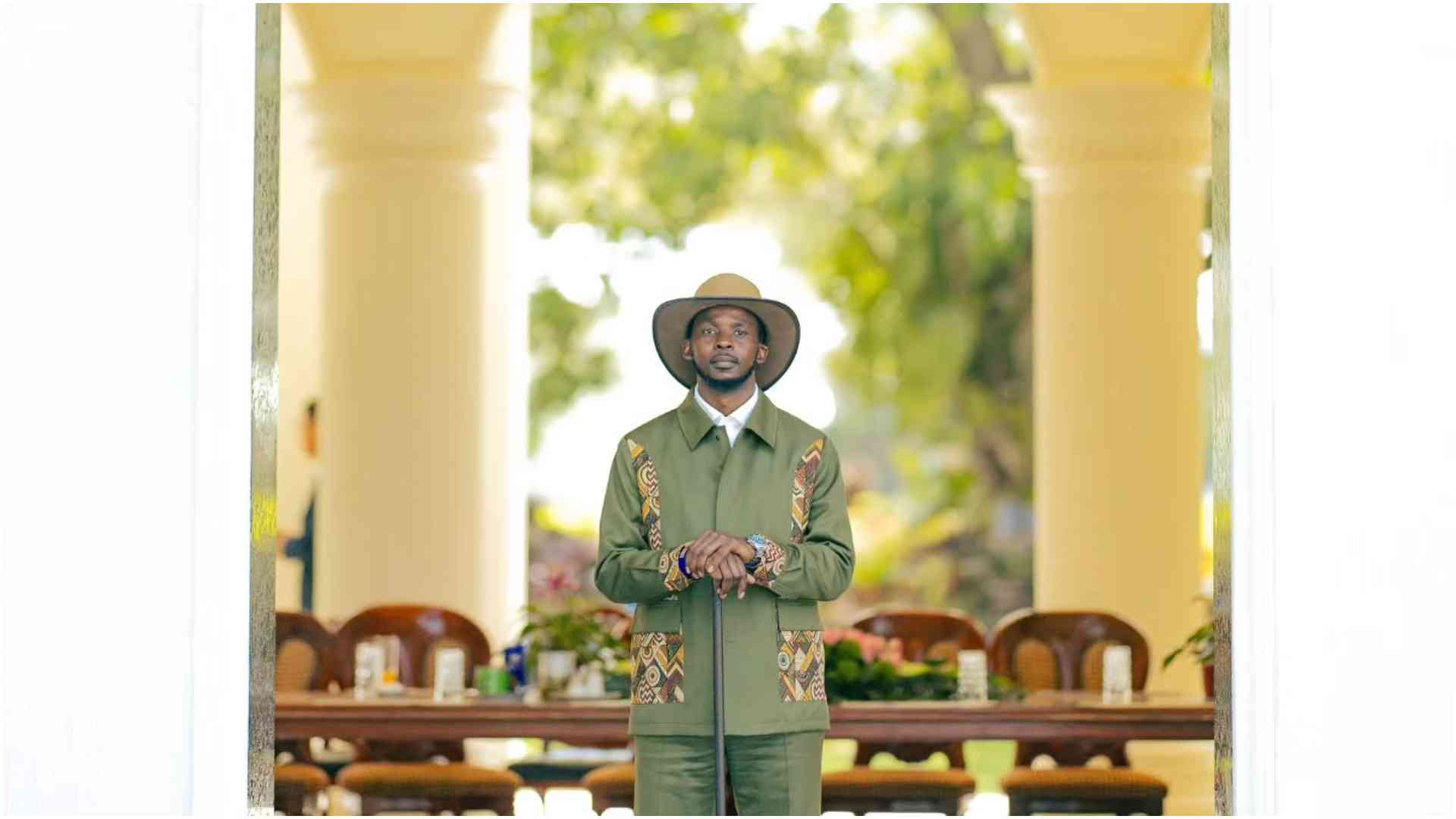
Yunge’s story began in a small mud‑walled house in northern Tanzania, where he grew up in humble conditions. Kenya’s first family’s in-law is believed to have lived with his grandmother and foster families, worked on farms and herded livestock and became independent by secondary school.
Inspired by a 2014 lecture on the Fourth Industrial Revolution, he founded SomaApps Technologies to use technology to solve African problems. Beyond SomaApp, Yunge has worked on AI and IoT projects such as KAYA, a smart speaker collecting Africa‑related data and Somafit, a health‑monitoring smartwatch.
He holds a bachelor’s degree from Tanzania’s Institute of Finance Management and has undertaken training at the University of Cambridge and through the Swedish Institute.
Keen about the Tanzanian’s background and past, Kenyans have since unearthed a video of a 17-year-old Yunge addressing world leaders at a G8 Summit in Berlin of German.
In short, Yunge is not just a tech guru but a recognised African innovator whose work focuses on education, health and digital inclusion.
Dating rumours
The Koito hasn’t gone without drama. Soon after the ceremony, a woman who identified herself online as Princess Nguema posted a series of bitter comments on Yunge’s Instagram page.
Her posts have since sparked speculation among netizens, with some suggesting she might be a former lover or someone who had hoped to be romantically involved with Yunge.
In past interviews, Charlene has generally spoken about experiencing heartbreak several times, but she has not publicly named the ex‑boyfriends.
However, sometimes back, she was linked to the renowned gospel singer, Daddy Owen.
Reportedly, the two have been close friends and work partners, having collaborated on charity and other youth projects. Their friendship and business ties have often sparked playful dating rumours online.
In December 2023, Charlene visited Daddy Owen’s family home in Kakamega, and was welcomed joyfully with Isikuti dancers before she met his mother. The visit, instantly fuelled speculations that the two were romantically involved, but hiding it.
But Daddy Owen and Charlene dismissed the spreading “grapevine”. saying the visit was connected to their foundation and development activities.
Interest in their friendship resurfaced after Charlene held the Koito, when Daddy Owen shared a birthday message on X, and fans teased him about missing the chance to marry into the First Family.
The gospel singer responded jokingly, saying their relationship remains purely platonic.
In 2024, gossip blogs claimed she was dating a Ghanaian man who accompanied her to the United States for the UN General Assembly, but these reports were not confirmed by Charlene or her family.
As late as a few days ago, Charlene was still keeping her followers guessing over her love life when suddenly Yunge was unveiled.
She follows the footsteps of her elder sister June Ruto who kept her life in general, away from the limelight, until she got married to a Nigerian man. June married Dr Alexander Ezenagu, a scholar and assistant professor of taxation and commercial law at Hamad Bin Khalifa University in Qatar, in 2021. They wedded in a beautiful ceremony, held in her parents’ garden at their Karen home.
Now, Charlene’s engagement has intensified discussion about President Ruto’s daughters marrying men from outside Kenya.
Some Kenyans have praised the cross‑border unions as a sign of an open, pan‑African move, while others have expressed their reservations.
At the Intonna farm, one of the men who stole the show was Zimbabwean businessman, Wicknell Chivayo – a close friend of President Ruto
As testimony that their friendship was deep, Dr Ruto personally drove Chivayo and his wife from the ceremony venue to a nearby helipad.
The 43-year-old flashy and controversial tycoon has a questionable background. He has faced fraud‑related legal proceedings and controversy over election‑material procurement in his home country.
Despite his closeness with Ruto being under extreme public scrutiny, Chivayo, has not shied away from sharing photos of his private encounters with the Kenya’s Head of State.
Neither State House nor Chivayo has ever publicly detailed the full nature of their relationship or any specific investment projects being undertaken.
Another guest who seemingly faced some sort of public backlash was, CNN’s correspondent and former Nation Media journalist, Larry Madowo. Some people felt betrayed to see the journalist attending and being in close proximity with the “adversaries: the political class that he always reports about.
He has since come forward and defended himself, calling Yunge, a close friend and brother.
Charlene’s Koito was more than a celebrity wedding preview. It sits at the intersection of culture and politics. And the key take-away was reaffirming the importance of upholding traditions in a modern, high‑profile setting.
Apart from Koito, Kenya enjoys diversity of such engagements from various cultures, among them Luo’s Nyombo, Taita’s ‘Wupe’, Kikuyu’s ‘Ruracio’, Kamba’s ‘Kyathe’ and many more. Further, it highlighted the growing trend of cross‑border relationships among East Africa’s elite.
The ceremony cast a spotlight on young African innovators like Yunge whose work on education and technology is changing lives.