A priest is detained for speeding while travelling with a silent teenage girl. Hours later, he is found dead inside a police station. The only witness has lost her memory, leaving investigators racing against time to uncover the truth before sunrise.
This is the backbone of The Priest Is Dead (TPID), a crime thriller film which explores themes of mystery, mental wellness, forbidden love, religious leadership, redemption and moral conflict. Premiering in September, TPID is presented by Dreamhouse Entertainment and directed by Kamau Ng’ethe and Jante Juma.
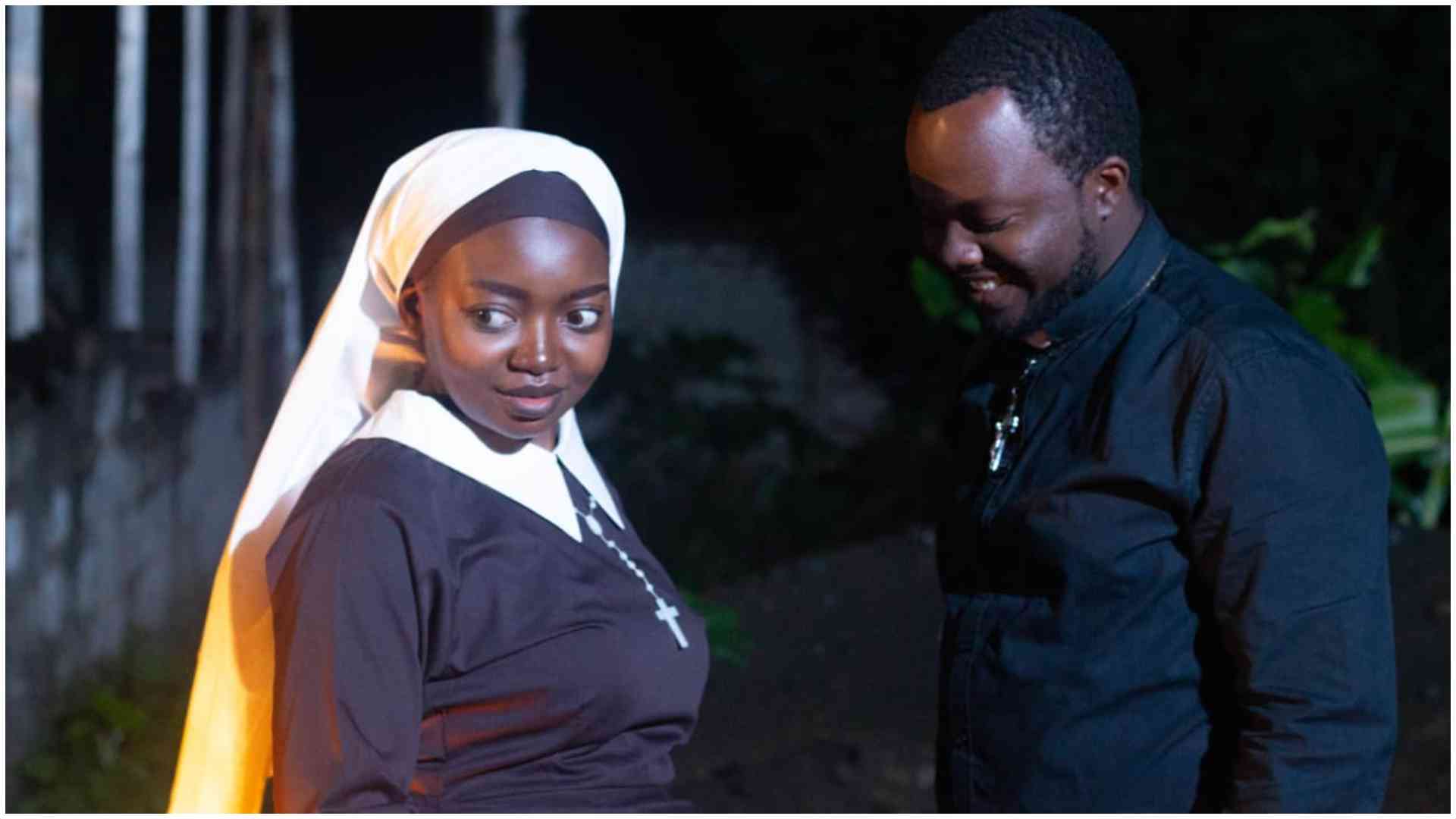
The film is set over one night at the police station and follows O.C.S. Hadiyah (Wakio Mzenge) and Detective Mugo (Ibrahim Muchemi) as they investigate the mysterious killing of Father Paul (Martin Kigondu). In the midst of faith, guilt and suspicion, the detectives must piece together a case in which every character could be hiding something.
TPID also stars Esther Kazungu as Sister Mary, Ellah Maina and Renee Gichuki as The Girl, Jeff Omondi as Detective Maina, Samson Omondi as Officer 1, Morris Mwangi as Addidah, and Sarah Kitonga as Taby.
Kigondu paints the picture of Father Paul as a man who is warm and put together, but his internal world tells a different story. He is introduced as a respected man of faith, but his personal choices lead him to the edge of tragedy. As a practising Catholic, he says portraying Father Paul did not fundamentally alter his views on faith or forgiveness.
“I’d heard of and come across men of faith who struggled with personal failings. I was nonetheless privileged to play a character who found themselves in a not-so-typical scenario, though,” he says.
He adds, In the movie he’s more of a man needing to survive than a religious figure shepherding his faithful. “I mostly relied on the script, instinct, scene partners and the directors rather than observing priests to embody the character.”
Even as much of the film takes place inside a police station, Father Paul’s story is explored on the road before his murder.
Kigondu reveals that he is fascinated by Father Paul’s desires, fears and capacity to love. He further praises the screenplay for slowly revealing its backstory, with every revelation raising fresh questions that kept him engaged.
Ellah Maina says The Girl is someone who finds herself in a predicament and doesn’t know what goes on throughout the entire film. She gets kidnapped and completely loses her memory, including her own identity.
“The girl is a victim because she remembers nothing and finds someone dead whom she doesn’t know. It is frightening for her. Women are mostly victims, and we have to fight for ourselves,” she explains.
Impressed that the film was shot by Kenyatta University graduates, Maina notes that the audience is yearning for crime thriller films.
“It’s good that we have invested in the genre of drama, but Kenyans fill up cinemas watching crime thrillers from Hollywood. I believe they want to see that too from here,” she says.
Scriptwriter and co-director Kamau Ng’ethe says that the film is based on a real-life experience in Ruiru, after he witnessed the aftermath of a fatal train accident.
Seeing police officers intensely questioning a teenage girl before he understood what had happened sparked his imagination and inspired the story’s interrogation scene. Within a week, he had created the treatment and plot.
He explains that the project aims to look beyond dramas and gang-related stories that have dominated local filmmaking. Following Dreamhouse Entertainment’s first feature film, Why U Hate, the team wanted to create an original thriller.
“I wanted to explore the themes of redemption and religion, not as heroes or villains. I wanted to portray flawed characters who are trying their best to redeem themselves,” he says.
Growing up in rural Kiambu, Ng’ethe says he experienced social, political, and economic life that gave him firsthand insight into the influence religion has in many communities.
He hints that one of the film’s intrigues is the relationship between Father Paul and Sister Mary. Their vulnerability and search for redemption are strong themes, but the unexpected betrayal came about during the writing process.
“The two characters meet, and they are vulnerable with each other. They need each other to redeem themselves from what they have done and move forward. The fact that they end up betraying each other was a surprise even to me,” he says.