Audio By Vocalize
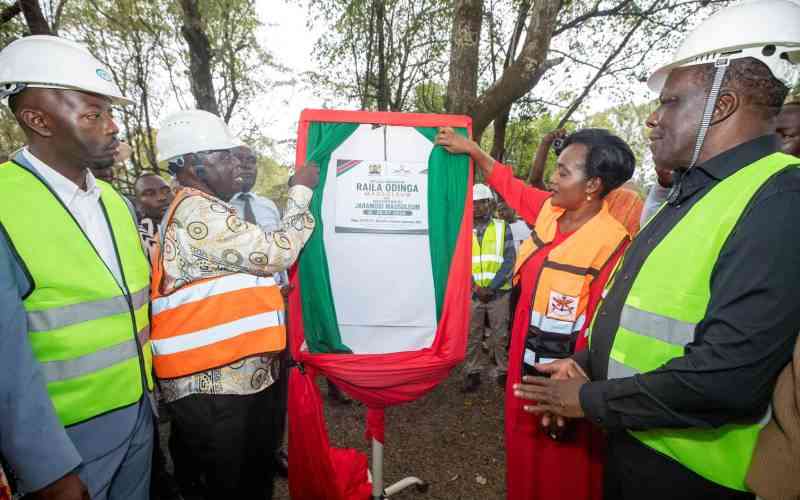
ODM Party leader Oburu Oginga, Cabinet Secretary Defence Soipan Tuya unveil the plaque for the construction of Raila Odinga Mausoleum with Cooperatives CS Wycliffe Oparanya and Raila Junior witness on July 20, 2026. [Courtesy]
The mausoleum in honour of former Prime Minister Raila Odinga will be completed within two months, ODM party leader and Siaya Senator Oburu Odinga has said.
Oburu noted that preparations are underway to establish a lasting monument celebrating the life and contribution of the late opposition leader.
Speaking during a handover ceremony in Bondo on Monday, Oburu said the project was designed to reflect the stature, values and public service record of his younger brother, expressing confidence that the final structure would meet the expectations of Kenyans and future generations.
“We want to complete the mausoleum in two months, and I hope the quality will be good and as modern as the young people want it. I hope it will deserve the dignity that my brother deserved,” Oburu said.
The senator said the monument would serve as a permanent reminder of Raila’s decades-long contribution to Kenya’s political development, democracy and public life.
He added that the structure was expected to become an important site where Kenyans and visitors can learn about the late leader’s journey and pay tribute to his legacy.
The new mausoleum will incorporate symbolic elements, with the number five forming a central part of the design. Architects said five steps leading down to the grave will be a key feature of the structure, with the number deliberately repeated throughout the architectural concept to give the monument deeper meaning.
The burial area will have a four-metre buffer space between the grave and the surrounding walls, allowing visitors to move around the site comfortably during visits and memorial activities.
Beyond the physical structure, the mausoleum will also serve as an interactive historical centre. Interior walls will feature mini exhibitions highlighting significant moments from Raila’s life, political career and public service.
Visitors will also have access to a digital archive through a QR code system, providing detailed information about his leadership journey, achievements and contribution to the country.
Raila Odinga died on October 15, 2025, at the age of 80 while receiving medical treatment in Kochi, India. He was buried on October 19, 2025, at Kang’o ka Jaramogi in Siaya County, alongside his mother, Mary Ajuma Odinga, in accordance with his wishes.
Oburu revealed that he initially had a different architectural vision for the mausoleum but was persuaded by younger designers to adopt a more contemporary concept.
“I had my own ideas, but the young people told me my ideas were old-fashioned. They said we needed something modern that would speak to the younger generation,” he said.
Oburu has also defended the political decisions made by Raila before his death, particularly the decision by the Orange Democratic Movement (ODM) to work with President William Ruto’s administration under the broad-based government arrangement.
Stay informed. Subscribe to our newsletter
Oburu said the move was driven by Raila’s commitment to protecting national unity and avoiding political violence.
“We are working together in the broad-based government. We are hoping that as we move on, by next year, we shall have formed a strong coalition which shall fight the others. We were left in the broad-based government by our late brother Raila Odinga, and we have not moved out of there,” he said.
He dismissed claims that political setbacks had weakened the alliance, saying supporters remained focused on building a strong political movement ahead of the next General Election.
“We are not shaken by small hiccups in elections like the one in Ol Kalou. We are moving steadily because we know who our enemy is and who our friend is,” Oburu said.
The senator said Raila’s political journey was anchored on democratic principles and peaceful engagement, rejecting violence and tribal divisions.
“Raila fought for democracy to the last end, but that democracy did not include bloodshed. What we do not want is bloodshed. We don’t want incitement and division based on tribes. We want a united Kenya,” he said.