Audio By Vocalize
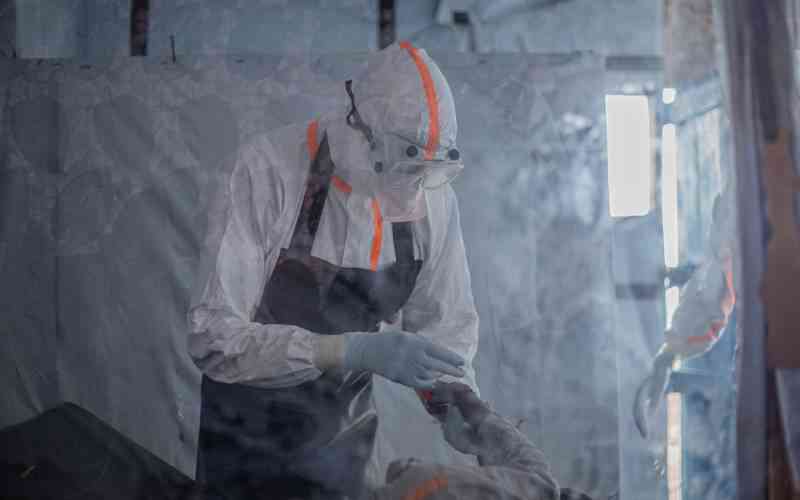
Seven American humanitarian workers are spending 21 days under medical observation in Kenya not because they are ill, but because they could become ill.
A Reuters report published today confirms they are seven American Disaster Assistance Response Team (DART) staff from the Christian humanitarian organisation Samaritan’s Purse . Franklin Graham, the organisation’s President and CEO, confirmed this, saying:
“Samaritan’s Purse has seven American Disaster Assistance Response Team staff members there. None of them have any symptoms, but they are being quarantined by the Kenyan government for 21 days.”
The aid workers, all returning from the Democratic Republic of Congo (DRC), where they were involved in responding to the world’s largest recorded outbreak of the Bundibugyo strain of Ebola, have no symptoms and have not tested positive for the virus.
Yet under new US public health rules, they cannot travel home immediately. Instead, they are completing a precautionary quarantine on Kenyan soil.
Their arrival has reignited debate over Kenya’s role in regional outbreak preparedness and raised a question that extends far beyond the fate of the seven Americans:
If Ebola crossed Kenya’s borders tomorrow, is the country ready?
The answer, infectious disease experts say, lies not in panic but in years of quiet preparation that most Kenyans have never seen.
That preparedness became evident during a recent visit by The Standard to Kenyatta National Hospital (KNH), where access to one of the hospital’s high-security isolation areas was restricted.
Hospital officials informed the reporting team that patients with Mpox were being managed in the unit and, for safety reasons, journalists were not allowed to enter or film inside.
The brief encounter offered a glimpse into the strict infection prevention measures that underpin Kenya’s readiness for dangerous infectious diseases.
According to an infectious disease physician at the Kenyatta National Hospital and head of the isolation ward, preparedness is far more than having an isolation room.
“One thing we should never do as Kenyans is panic,” he says. “Panic only makes the situation worse. Instead, we should ask ourselves one question: Are we prepared?”
His answer is unequivocal. “As a government and as health institutions, we are in preparedness mode.”
Stay informed. Subscribe to our newsletter
Dr Nyukuri explains that preparedness begins long before the first patient arrives at a hospital.
It means evaluating whether enough trained personnel are available, whether laboratories have the necessary testing reagents, whether protective equipment is adequate, and whether health workers understand every step required to safely manage a suspected Ebola patient.
“Here at Kenyatta National Hospital, we have conducted extensive training for healthcare workers,” he says. “We have carried out readiness assessments, simulated patient scenarios and practised every stage of care from the moment a suspected patient arrives, through admission, isolation and treatment.”
The simulations, he explains, are designed to ensure that no decision is being made for the first time during a real emergency. “When we eventually encounter a suspected case, it should not be something new to us.”
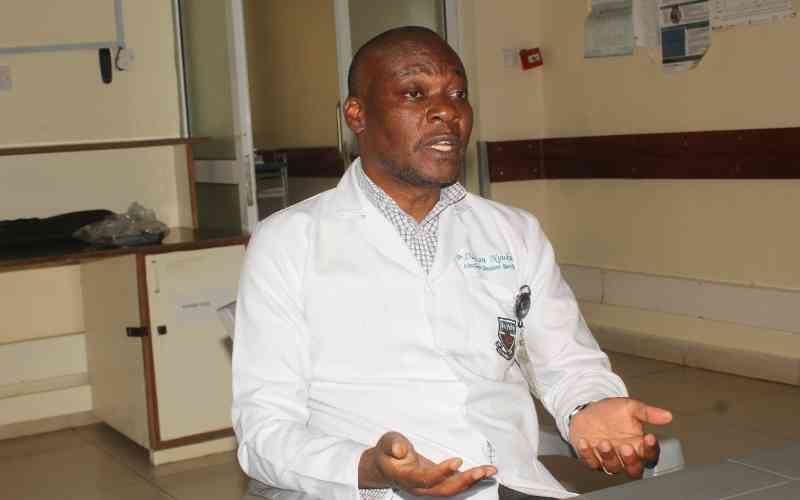
Preparedness also extends beyond hospitals. Health surveillance teams remain stationed at airports and land border crossings, screening travellers arriving from affected regions while rapid response teams stand ready to investigate suspected infections.
“So far, Kenya has done a good job,” Dr Nyukuri says. “We have not recorded a confirmed case despite the increasing numbers in the DRC. We pray that remains the case. But if we receive one patient, we are prepared.”
How Ebola jumps from animals to people
Although Ebola is often associated with outbreaks, the virus begins its journey quietly in nature.
Dr Nyukuri explains that fruit bats are believed to be the natural reservoir of the virus. “They carry the virus without becoming sick themselves,” he says.
Problems arise when increasing human activity brings people into closer contact with wildlife.
Mining, logging, hunting, charcoal burning, expanding settlements and encroachment into forests all increase the likelihood of viruses crossing from animals into humans.
“We call these zoonotic diseases,” Dr Nyukuri explains. “Once the virus infects a human being, it can then spread from person to person through contact with infected body fluids, leading to outbreaks within families and communities.”
You see, Ebola is a family; many people speak about Ebola as though it were a single virus.
In reality, scientists recognise five different species.
The best known is the Zaire strain, responsible for the devastating West African epidemic between 2014 and 2016.
“It is highly infectious and highly deadly,” says Dr Nyukuri. “But because we have studied it extensively, we now have licensed vaccines and effective treatment options.”
The Sudan strain, which has repeatedly caused outbreaks in Uganda, is the second most significant.
The current emergency, however, involves the Bundibugyo strain, first identified in Uganda’s Bundibugyo District.
“This is the third recorded outbreak caused by Bundibugyo,” Dr Nyukuri explains. “We have not studied it nearly as much as the Zaire strain.”
There is currently no licensed vaccine specifically targeting Bundibugyo Ebola.
Instead, researchers are evaluating experimental vaccines while clinical trials in eastern DRC are testing promising treatments, including the monoclonal antibody MBP134 and the antiviral drug remdesivir.
“That is why this outbreak concerns many of us,” he says. “We still have limited tools compared to what exists for the Zaire strain.”
While Kenya has not recorded a confirmed case linked to the current outbreak, neighbouring countries remain on high alert.
Uganda on Thursday declared its last Ebola patient and has begun the mandatory 42-day countdown required before the country can officially be declared Ebola-free.
In contrast, eastern DRC continues battling sustained transmission, placing enormous pressure on treatment centres and frontline health workers.
It is against that backdrop that Kenya has found itself playing an increasingly important role in regional preparedness.
Their presence has nevertheless fuelled public debate over Kenya’s preparedness infrastructure and the country’s place in global health security.
Earlier this week, two American humanitarian workers who contracted Ebola while working in eastern DRC were medically evacuated to Germany for specialised treatment after receiving initial care in Bunia. Their evacuation underscores an important distinction: Kenya is currently serving as a precautionary observation site for exposed but healthy personnel, while confirmed Ebola patients requiring advanced clinical care have been transferred to Germany.
For Dr Nyukuri, the conversation should remain grounded in science rather than fear.
Preparedness, he says, is not measured only by isolation wards or specialised equipment, but by the ability of an entire health system to detect threats early, respond quickly and protect both patients and healthcare workers.
“My prayer is that Kenya never records a case,” he says. “But preparedness means planning for the day you hope never comes.”
As seven healthy humanitarian workers quietly complete their quarantine in Kenya, that preparation is no longer an abstract exercise.
It is being tested in real time. The development has also drawn attention to the contrasting roles played by East African countries during the current outbreak.
Uganda, widely regarded as one of Africa’s most experienced countries in responding to Ebola, recently brought its own outbreak under control and has now entered the 42-day countdown required to be declared Ebola-free. Over the years, the country has built a reputation for rapidly detecting cases, tracing contacts and isolating patients, earning praise from the World Health Organization for repeatedly containing outbreaks before they spread widely.
Yet despite that experience, Uganda did not become a destination for foreign humanitarian workers requiring precautionary quarantine or post-exposure observation.
Instead, that role has fallen to Kenya, where seven American aid workers are now completing a mandatory 21-day quarantine after working in Ebola-affected areas of eastern Democratic Republic of Congo.
The contrast raises broader questions about how countries are selected to support international outbreak responses. While Uganda has demonstrated its capacity to treat Ebola patients within its own borders, Kenya’s involvement appears to reflect a different function—serving as a precautionary observation site for exposed personnel rather than a treatment centre for confirmed cases.
Health experts caution against interpreting the distinction as a measure of either country’s clinical capability. Instead, they say such decisions are often influenced by a combination of bilateral agreements, operational logistics, evacuation arrangements and the specific objectives of international public health partners.