Audio By Vocalize
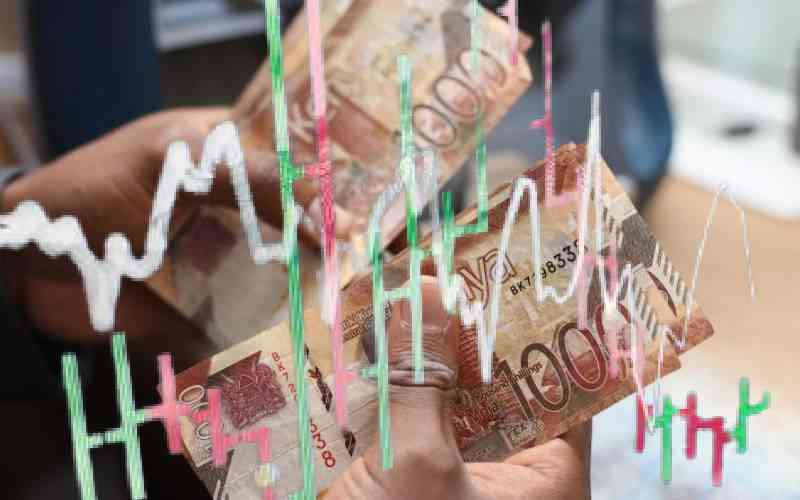
Kenya’s foreign exchange reserves are set to climb to a seven-month high, bolstered by proceeds from the sale of a 15 per cent government stake in telecoms giant Safaricom, fresh World Bank funding, and Kenya Pipeline Company privatisation receipts.
Central Bank of Kenya (CBK) governor Kamau Thugge said on Tuesday the Safaricom transaction proceeds, totaling Sh244.5 billion, are expected to hit the state’s accounts soon, providing a significant boost to Kenya’s external buffers.
“We’ve seen the money from the Safaricom transaction. It’s yet to hit our reserves position, but I think it’s just about to,” Thugge told the 23rd East African Banking School Conference. “With such a buffer, we expect the shilling to remain stable.”
The remarks came as the CBK released data showing reserves stood at $14.127 billion (approximately Sh1.826 trillion) as of July 9, equivalent to 6 months of import cover, up from $13.173 billion (Sh1.702 trillion) posted a week earlier.
The increase was driven by a $750 million (Sh96.9 billion) World Bank disbursement for governance and social protection programmes.
The pending Safaricom inflows, combined with the World Bank funding and KPC IPO proceeds of Sh103.45 billion ($800 million) received in April, are expected to push reserves toward seven months of import cover.
This build-up now reverses a sharp drawdown between late March and late April, when the CBK burned nearly $800 million of its reserves to defend the shilling after closure of the Strait of Hormuz sent global oil prices soaring above $100 per barrel.
However, the International Monetary Fund (IMF) had earlier urged Kenya to bolster its financial buffers against economic spillovers from the Middle East conflict. At the conclusion of a March mission to Nairobi, an IMF staff team led by Haimanot Teferra highlighted the need to build resilience to external shocks, “including potential spillovers from developments in the Middle East,” the lender had said.
The reserves recovery comes at a critical moment for President William Ruto’s administration, which is battling the latest economic meltdown from renewed US-Iran hostilities. The conflict has freshly
disrupted global oil markets, with Murban crude rising to $72.27 per barrel on July 9 from $67.99 a week earlier.
With approximately 14 months to go before the next general election, the CBK is under intense pressure to shield the shilling from volatility. The currency has remained remarkably stable since March 2024, trading between 120 and 130 shillings per dollar, but the CBK’s firepower is being closely watched by markets.
Foreign exchange reserves serve as a critical financial safety net, allowing the CBK to intervene in currency markets during periods of excessive volatility. They also ensure Kenya can service external debts and fund essential imports such as medicines and fuel without resorting to extreme currency devaluation.
A higher import cover indicates a more robust position, while lower cover suggests vulnerability. The statutory requirement is at least four months of import cover.
The Safaricom transaction, which became effective on June 30, saw Vodacom acquire 6.01 billion shares at Sh34 each.
Stay informed. Subscribe to our newsletter
An additional Sh40.2 billion was paid upfront for future dividend rights on the state’s remaining shares, bringing the total windfall to Sh244.5 billion.
The deal increases Vodacom’s stake in Safaricom to 55 per cent from 35 per cent handing the South African group majority control of Kenya’s largest telecom operator. The government’s stake drops to 20 per cent from 35 per cent.
Thugge has previously backed the divestiture, saying it would deliver multiple economic benefits, including boosting foreign exchange reserves, stabilising the shilling, and creating room to ease domestic borrowing and interest rates.
The KPC IPO, which closed in February, was Kenya’s first major state privatisation since 2015. The government sold a 65 per cent stake in the fuel transporter, raising Sh106.3 billion at full subscription. The proceeds were officially received in April.
The reserves build-up comes despite headwinds from the Middle East conflict, which has disrupted trade and flow of remmittances. Thugge noted that about 10 per cent of Kenya’s remittances, equivalent to roughly $500 million, come from Gulf countries, while just under 10 per cent of exports are destined for the region.
“This year, we had expected a widening of the current account deficit,” Thugge said. “We get about 10 per cent of our remittances from the Gulf area. That’s about $500 million. We also export quite a bit to the Gulf area… and of course that has been disrupted”.
Despite these challenges, Thugge said Kenya has continued to receive enough foreign currency inflows to offset the pressure, including from foreign direct investment, multilateral lenders and strategic investments.
The strengthened reserve position is expected to provide further support for the shilling in the coming weeks. With reserves now providing about six months of import cover and expected to rise further, the CBK has clearer capacity to lean against disorderly market moves if global volatility spikes, analysts say.