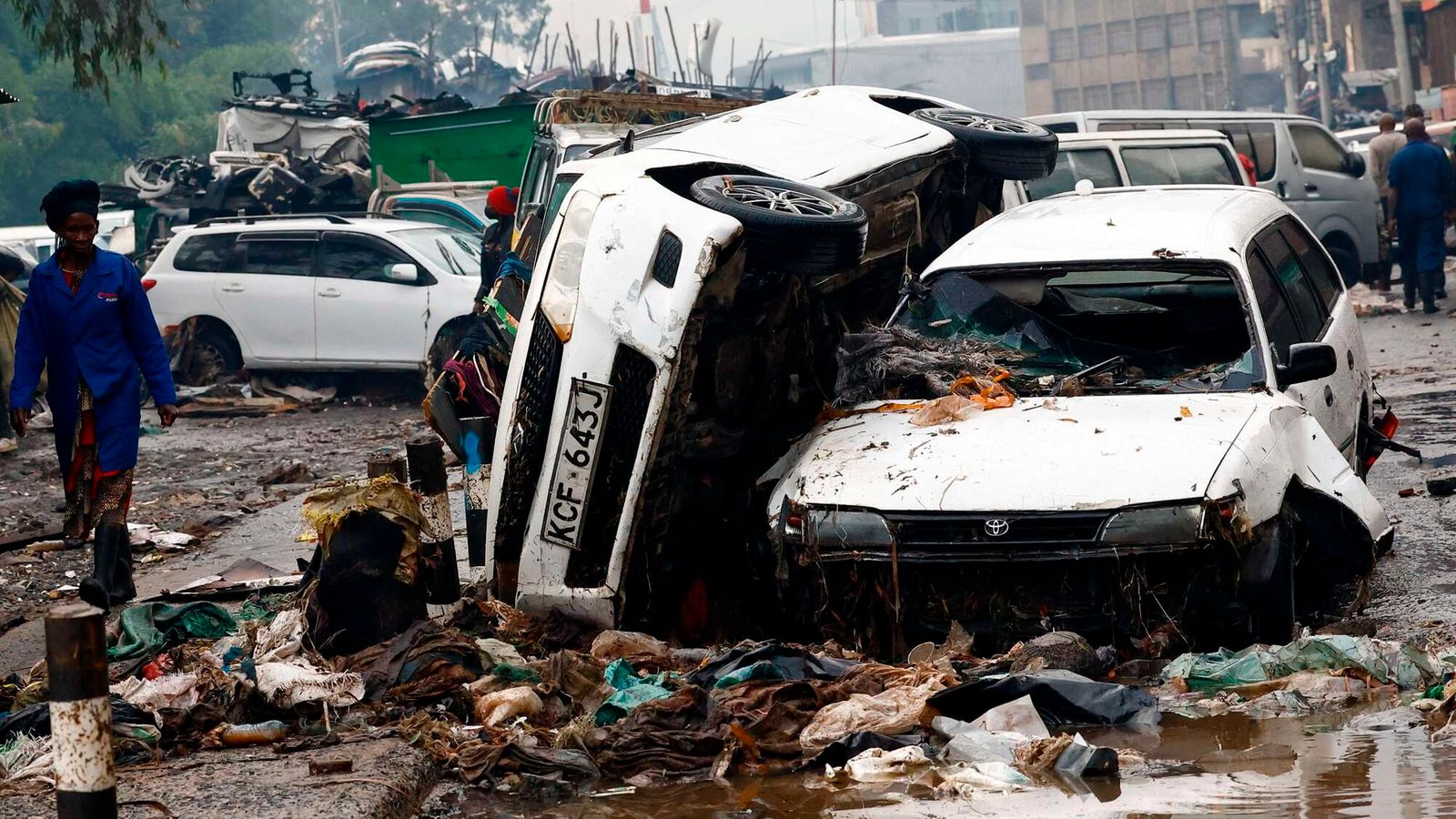
Kenya lost an estimated Sh187.8 billion due to floods in just six months in 2023 and 2024, exposing the mounting financial burden of climate disasters that has prompted the government to overhaul financing of its emergency operations.
The Treasury has disclosed in a new document that it is adopting a new financing strategy to enhance the capacity of national and county governments to manage disaster risks.
“These impacts [earlier shocks] were further exacerbated by the severe floods in October-December 2023 (short rains) and in March-May 2024 (long rains), in March-May 2024 (long rains), which caused total damage and losses estimated at Sh187.82 billion, further straining public finances and slowing economic recovery,” the Treasury says in the new strategy document.
Under the strategy, the government is seeking to move away from emergency relief, donor appeals, and impromptu budget reallocations towards insurance and other pre-arranged disaster financing mechanisms in the coming years.
This marks a major change in official thinking, treating floods, droughts, and other disasters not merely as humanitarian emergencies, but as fiscal shocks capable of destabilising public finances and undermining economic growth.
“Kenya’s disaster risk profile is becoming increasingly complex and severe,” the Treasury says in the strategy document.
It cites climate change, environmental degradation, urbanisation, and population growth as factors increasing the country’s exposure to disaster losses.
The Treasury says that the devastating impact of recent floods pushed it to rethink its climate-related emergency funding.
The destruction followed one of the country’s worst drought cycles in decades and reinforced concerns within the government that disaster-related costs are becoming too large and too frequent to finance through emergency interventions alone.
Treasury Cabinet Secretary John Mbadi says the strategy is intended to ensure Kenya has predictable financing arrangements in place before disasters strike.
“The Government of Kenya recognises that disaster risks are increasing in frequency, intensity and complexity due to climate change, environmental degradation, urbanisation and other socio-economic pressures,” Mr Mbadi writes in the strategy.
He says the framework seeks to ensure resources are available “before disasters occur, enabling timely and effective action that protects lives, livelihoods, development gains and fiscal stability”.
Under the plan, the government is seeking to move away from a predominantly reactive approach toward a financing system covering prevention, preparedness, response, recovery, and reconstruction.
Unlike the current model, where the government often scrambles to raise money after disasters through emergency appeals, supplementary budgets, or reallocations from development programmes, the new approach seeks to arrange financing in advance.
“By integrating disaster risk into every stage of the budget cycle and diversifying its portfolio of risk reduction, retention, and transfer instruments, the Government of Kenya is taking the necessary steps to safeguard its economic future,” the Treasury says.
Treasury plans to expand contingency funds, contingent credit lines, and insurance instruments that can be triggered automatically when predefined disaster thresholds are met.
The aim is to release money quickly without waiting for fresh budget approvals, donor pledges, or emergency fundraising campaigns.
Under the proposed “risk layering” framework, more severe but less frequent events such as major floods, droughts, and epidemics would be covered through pre-arranged insurance and other risk-transfer mechanisms. Smaller and more frequent disasters will continue to be financed through budget reserves and emergency funds.
The Treasury says the objective is to provide “rapid and reliable liquidity after a disaster” while reducing dependence on ad hoc post-disaster financing.
The strategy amounts to an acknowledgement that Kenya’s traditional disaster financing model is under strain. The current disaster management has largely focused on responding to emergencies after they occur rather than on financing preparedness and risk reduction.
Industry leaders have raised similar concerns about Kenya’s response to climate-related risks.
Kenya Reinsurance Corporation managing director Hillary Wachinga in April warned of increased frequency and severity of flood-related claims in recent years, with insured and uninsured losses ranging from Sh10 billion to Sh30 billion annually.
“In Kenya, there is increased frequency and severity of flood claims in the recent past, with these losses oscillating between Sh10 billion to Sh30 billion annually, in terms of both insured and uninsured flood losses,” Mr Wachinga wrote in a media article.
He said the likelihood and impact of natural catastrophe risks are expected to continue increasing because of climate change, rapid urbanisation, deforestation, rising asset values, and human settlement in flood-prone areas.
“The likelihood and impact of NatCat [Natural Catastrophe] risks are expected to continue rising due to climate change, rapid urbanisation, increase in value of assets exposed to these risks, deforestation and human settlement in flood-prone zones as well as inadequate mitigation strategies,” Mr Wachinga wrote.
The warning came after the devastating 2024 floods left insurers facing more than Sh5 billion in claims, raising questions whether existing insurance pricing adequately reflects climate-related risks.
The industry is also bracing for another wave of claims following severe floods in March this year, which destroyed homes, businesses, and vehicles across the country and left 112 people dead, and thousands of others injured or displaced.
“There is also limited knowledge on NatCat insurance protection and low uptake of available insurance protection due to limited availability and affordability,” Mr Wachinga noted.
That gap between rising risks and low insurance penetration is increasingly becoming a national economic concern.
The Treasury’s strategy notes that while Kenya has established a range of disaster financing instruments over the past decade, protection remains heavily concentrated around drought.
Yet floods are emerging as one of the country’s fastest-growing sources of economic losses.
“Coverage remains uneven,” the report says, noting that financing mechanisms remain largely geared towards drought response.
Protection against floods, landslides, epidemics, fires, and other hazards remains limited despite growing exposure. To address the challenge, Kenya Re has proposed the creation of a national flood insurance pool.
The proposed structure would bring together government, , reinsurers, and capital market investors under a public-private partnership arrangement.
Under the proposal, Kenya Re would act as the residual reinsurer and administrator of the scheme.
Licensed insurers writing property risks would cede flood exposures to the pool in exchange for standardised reinsurance protection.
The proposal is designed to address a fundamental market challenge, where flood risks are often too concentrated and too volatile for individual insurers to absorb efficiently.
“Flood risk in Kenya is too concentrated and too volatile for individual insurers to price and fully retain,” Mr Wachinga wrote.
“A pooled structure spreads the risk, brings down the cost, and makes cover accessible, which will drive uptake.”
Kenya Re says the model could mirror Britain’s Flood Re scheme and Türkiye’s Catastrophe Insurance Pool, both established after governments concluded conventional insurance markets could not adequately absorb large-scale disaster risks.
The Treasury’s strategy similarly envisages a greater role for insurance markets, capital market instruments, and private-sector financing in protecting public finances from future shocks.
Treasury officials estimate that Kenya will require nearly $44 billion (about Sh5.7 trillion) between 2020 and 2030 to build resilience against climate-related risks. Available climate finance currently meets only a fraction of those requirements.