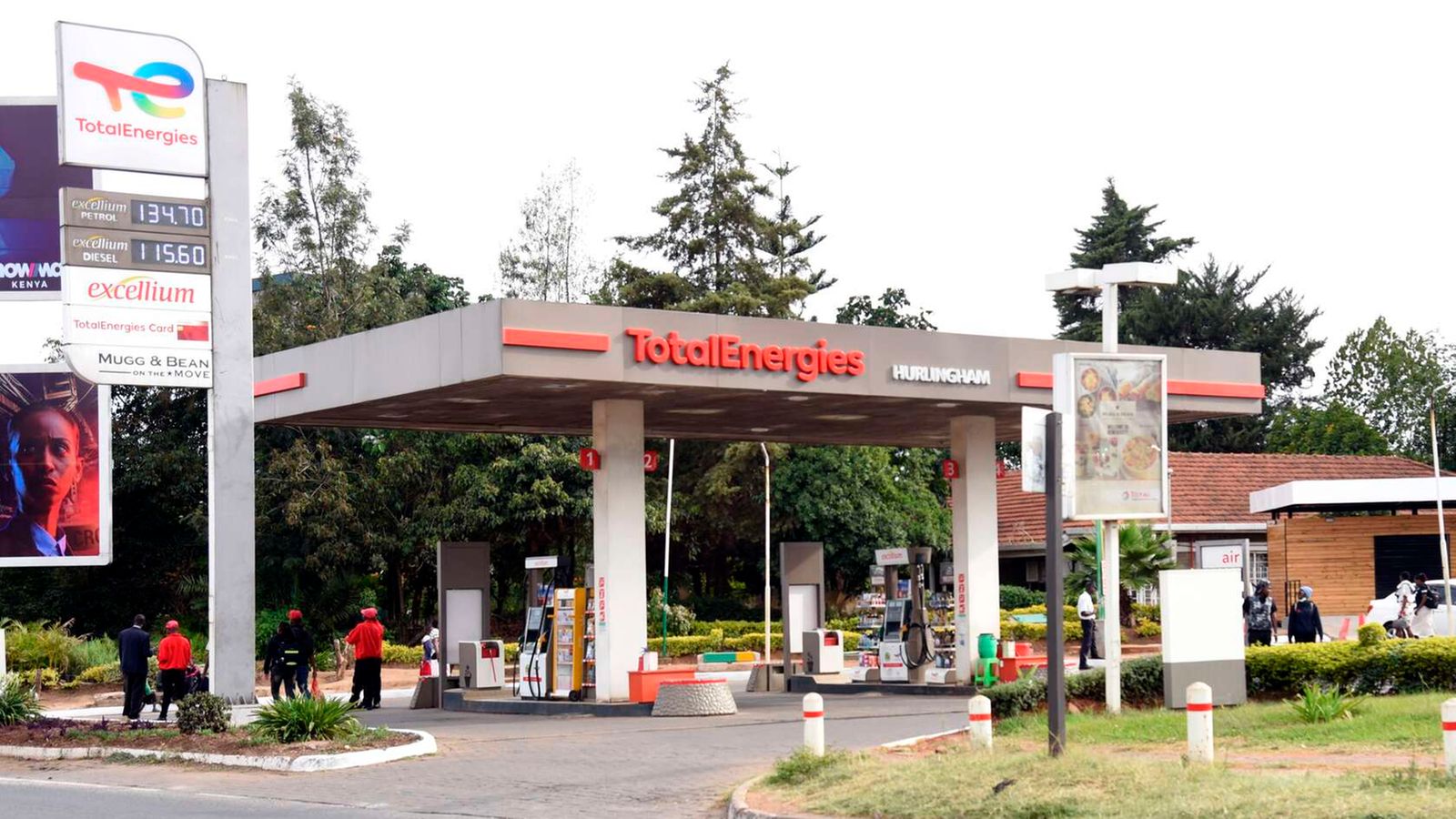
TotalEnergies Marketing Kenya now powers more than half of its fuel stations with solar energy as the oil marketer gradually reduces its reliance on the national grid to cut costs and secure a more stable electricity supply.
Company disclosures show that 154 of its stations across Kenya were powered by solar systems as of December 2025. TotalEnergies had 285 stations as of May 2026, meaning 54.03 percent of its outlets are now powered by solar energy.
The installation of solar systems is part of a twin strategy to lower electricity bills from Kenya Power, guarantee stable supply by reducing exposure to grid outages and cut carbon emissions.
The French-owned company, Kenya’s second-largest oil dealer by market share, is among a growing number of large businesses investing in alternative energy sources, a trend that could eventually dent Kenya Power’s revenues.
“As at the end of December 2025, 154 service stations across the country were powered by solar energy,” TotalEnergies said in its report for the year ended December 2025.
The company did not disclose the savings generated from the use of solar power at the 154 stations.
A growing number of firms have turned to solar and biomass energy to supplement or replace electricity supplied by Kenya Power, seeking lower costs and protection from supply interruptions such as blackouts.
Manufacturers and large businesses that have invested in their own solar generation include Bio Food Products, TotalEnergies Kenya, Maisha Mabati Mills, Simba Cement, Unilever Tea Kenya, British American Tobacco, Africa Logistics Properties, Bidco, Mabati Rolling Mills, Centum Real Estate and Devyani Food Industries.
Beverage maker Coca-Cola last year received regulatory approval to install solar plants at its facilities in Embakasi, Nairobi and in Kisumu. The combined capacity of the plants will be 3.98 megawatts (MW).
Revenue risk
The migration of large firms to self-generated solar power could, over time, affect Kenya Power’s revenues given the importance of industrial and commercial customers to its business.
In the year ended June 2025, industrial and commercial customers accounted for 64 percent, or Sh148.2 billion, of Kenya Power’s electricity sales revenue.
Kenya Power has previously warned that a large-scale shift by industries and businesses to alternative energy sources could hurt its bottom line.
According to data from the Energy and Petroleum Regulatory Authority, TotalEnergies held a market share of 14.01 percent as of December 2025, making it the third-largest oil marketer in Kenya.
Vivo Energy led the market with a 20.56 percent share, followed by Rubis Energy Kenya at 13.77 percent.