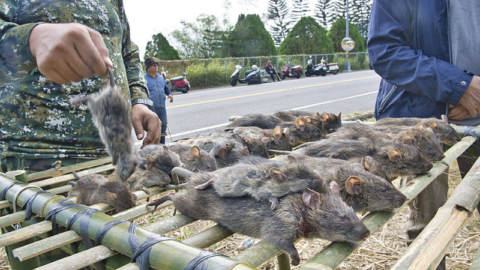
A disturbing surge in the illegal trade of donkey skins is threatening livelihoods across Kenya, with experts revealing that at least 3,721 donkeys were slaughtered last month alone, mostly for their hides.
The killings, often carried out in bushes and remote areas away from regulatory oversight, are being driven by rising global demand for donkey hides used to produce Ejiao, a traditional Chinese medicine derived from donkey gelatine.
Despite Kenya’s ban on donkey slaughterhouses, the trade still flourishes albeit simply going underground.
Speaking on Spice FM’s The Situation Room, Raphael Kinoti, the regional director at Brooke East Africa, said the problem dates back to 2016 when donkey slaughterhouses were first licensed.
“That decision inadvertently created a market,” he said. “Young people, many of them unemployed, saw an opportunity. They began stealing donkeys, slaughtering them in the bush, and selling the skins to traders,” Dr Kinoti noted.
China’s donkey population has declined from about 11 million in the 1990s to less than two million today, creating a supply gap that is now being filled by African countries.
“As China’s middle class grew, more people could afford ejiao. That increased demand, and Africa became the new source,” Kinoti said.
Kenya has paid a heavy price. National data shows the country’s donkey population dropped from 1.8 million in 2009 to 1.1 million in 2019, a 44 per cent decline in just ten years.
While the government has taken steps, including shutting down licensed slaughterhouses, the illegal trade continues to thrive, often in plain sight.
Florence Ndeti, the director at Caritas, an organisation working with donkey welfare partners in Kitui, recounted a recent case that underscores the scale of the problem.
“Last month, a multi-agency team intercepted a container carrying 3,721 donkey skins at Kanyonyo,” Ms Ndeti said. “That essentially means 3,721 donkeys were killed.”
Yet despite the scale of the seizure, those arrested were released and the consignment allowed to proceed.
“They had no proper documentation. Some papers were from Uganda, others were inconsistent. But by Friday, the same container was cleared and allowed to move,” Ndeti said.
A similar incident in Kithimani saw skins confirmed by veterinary officers as donkey hides—complete with tails—later declared as goat skins in court and released.
“The laws exist, but enforcement is weak. There is clear complicity or negligence somewhere along the chain,” she said.
Her concerns raise a critical question: how do illegal consignments pass through multiple checkpoints, from rural collection points to major export hubs, without being stopped?
Kinoti revealed that while a local trader may buy a donkey skin for as little as Sh5,000, its value skyrockets once it reaches international markets.
“One skin can produce about 1.5 kilogrammes of gelatine. A kilogramme of that gelatine can sell for up to Sh150,000,” he said. “So you are looking at over Sh200,000 from a single donkey.”
In contrast, when skins were legally exported, traders would declare values as low as Sh100 at county level and Sh200 at the Kenya Revenue Authority.
“That means the government earns just Sh300, while the trader makes hundreds of thousands. It’s a zero-sum game for Kenya,” he added.
This massive profit margin fuels corruption, smuggling, and organised networks capable of bypassing weak regulatory systems.
The illegal trade is not confined to one region. Counties such as Turkana, Kajiado, Kitui, and even parts of northeastern Kenya have become hotspots.
In Turkana, the vast and remote terrain provides cover for illegal slaughter. In Kajiado and Machakos, proximity to Nairobi makes it easier to transport both skins and meat.
“Donkeys are stolen from places like Mandera, Wajir, and Garissa, transported across counties, and slaughtered elsewhere,” said Kinoti.
The meat, often processed under unhygienic conditions, finds its way into urban markets.
“You would be shocked at how many vehicles: proboxes, pick-ups, even matatus, have been intercepted carrying donkey meat into Nairobi,” Florence added.
Because donkey meat closely resembles beef, consumers may unknowingly eat it.
“You cannot easily tell the difference,” she said. “That’s the worrying part.”
Beyond economic losses, experts warn that the consumption of unregulated donkey meat poses serious health risks.
Unlike cattle or goats, donkeys are not routinely inspected, vaccinated, or managed within formal livestock systems.
“Donkeys can carry diseases such as anthrax and brucellosis,” Kinoti warned. “These diseases can be transmitted to humans, especially when meat is handled or consumed without proper inspection.”
Brucellosis, for instance, can mimic malaria but become chronic and difficult to diagnose.
“We are sitting on a public health time bomb,” he said.
For millions of Kenyans, the donkey is more than just an animal. It is a lifeline.
In rural and arid regions, donkeys transport water, firewood, farm produce, and even sick people where roads are inaccessible.
“In Garissa, you will find a woman with ten donkeys, each carrying jerrycans of water,” Kinoti explained. “Without those animals, her entire household collapses.”
Across Kenya, donkeys support an estimated six million people. A single donkey can sustain between three to five individuals and generate up to Sh11,000 per month.
In urban and peri-urban areas, donkeys provide employment to thousands of youth in waste collection, construction, and transport.