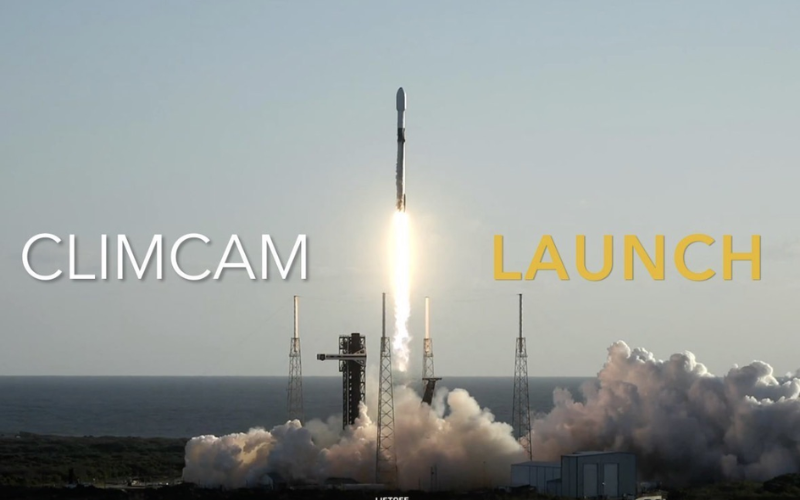
The Kenya Space Agency (KSA) has confirmed the successful launch of the Climate Camera (ClimCam) payload to the International Space Station (ISS), marking a milestone in Africa’s contribution to space-based climate observation.
The payload was launched aboard a SpaceX Falcon 9 rocket from Cape Canaveral Space Force Station at 1:41pm East African Time on Saturday. The mission is part of Northrop Grumman’s Cygnus XL commercial resupply flight (NG-24). About seven minutes after liftoff, the Cygnus XL spacecraft separated successfully from the rocket’s first stage and is now en route to the ISS.
The spacecraft is expected to dock with the ISS on the morning of Monday, April 13, where it will deliver supplies alongside a suite of scientific experiments.
ClimCam is among the key payloads on board and was developed through collaboration between the Kenya Space Agency, the Egyptian Space Agency, and the Uganda National Space Programme.
The Kenya Space Agency (KSA) announces the successful launch of the Climate Camera (ClimCam) payload, destined for the International Space Station (ISS). The liftoff took place today, Saturday, 11 April 2026, at 1:41 p.m. East African Time aboard a SpaceX Falcon 9 rocket from… pic.twitter.com/aki0NE8X9t
— Kenya Space Agency (@SpaceAgencyKE) April 11, 2026
Its development progressed through multiple phases, including design, integration and testing. Assembly, Integration and Testing (AIT) was carried out in Cairo, with further validation conducted at Airbus Defence and Space facilities in Houston, Texas.
The project was selected under a competitive programme run by the United Nations Office for Outer Space Affairs, in partnership with Airbus Defence and Space, under the Access to Space for All initiative.
The initiative promotes international collaboration in space technology development and expands access to orbital platforms. Equipped with artificial intelligence, ClimCam is designed to deliver near real-time weather and climate data.
Officials say the system will improve environmental monitoring, strengthen disaster preparedness, enhance natural resource management, and support climate resilience across Eastern Africa.
“The launch and eventual hosting on the ISS marks a significant milestone in international cooperation in harnessing space technologies,” KSA said.
“Equipped with AI-powered capabilities, ClimCam is designed to deliver near real-time weather and climate data.”
Beyond its scientific role, the mission underscores growing regional cooperation in Earth observation, artificial intelligence, and space engineering. It also reflects Kenya’s continued focus on leveraging space technology to support sustainable development and environmental protection.
KSA said further updates will be issued after the spacecraft successfully docks and the payload is installed on the ISS.
The agency, which oversees Kenya’s space activities, continues to invest in capacity building, innovation, and the use of space-based data to support socio-economic development.