When Dr Saad Ramadan’s elderly parents and five siblings fled their village in southern Lebanon under raining Israeli strikes for Beirut, he thought they were evacuating to safety.
But safe has become “a relative word” these days, he says.
For the past month, his large family have been living in a tiny two-bedroom apartment after abandoning the home his parents had lived in for 80 years with nothing but documents and the clothing on their backs.
“You don’t really know when suddenly these buildings where civilians have been sheltering become ‘legitimate targets’,” Ramadan, who migrated to Australia in 1991, says.
“I don’t know if my family’s turn will come, but some entire civilian families have been wiped out, butchered in cold blood. Any loss of innocent life is a loss.”
On Saturday, Ramadan was among thousands of protesters who rallied in Melbourne, Adelaide and Sydney pushing for the federal government to impose sanctions on Israel and mourning the loss of innocent lives in the Middle East. Alongside the Lebanese flags were Palestinian ones.
On Wednesday, Israel carried out its largest attack on Lebanon since its war with Hezbollah began, killing hundreds of people and wounding 837 as bombs rained down in densely populated residential areas of Beirut. It is now being called “Black Wednesday” by the Lebanese community.
“I was on the train with Lebanese families coming into the gathering in Sydney and everyone feel devastated,” Ramadan says. “There is no single person that you talk to who haven’t lost something: a mum, a dad, a sister, a nephew, a niece.
“I go to work every morning, come back at 6pm and have to catch up with who was martyred, what building was bombed. The emotional burden is too heavy to live with.”
Gamel Kheir “can’t even look at social media any more”. It’s not just seeing the bombs fall down on Lebanon, it’s the absence of strong condemnation from the western world, including people in his home country of Australia.
“I genuinely can’t,” he says. “I’m beyond the stage of torn.”
Kheir, who is secretary of the Lebanese Muslim Association, is among religious community leaders from across the diaspora who are urging the Australian government to take a harder stance on Israel.
The prime minister has called for Lebanon to be included in the two-week Middle East ceasefire and led a group of other countries in expressing deep concern about “the worsening humanitarian situation and displacement crisis”.
“International humanitarian law must be upheld by all parties to the conflict in all circumstances,” the joint statement, penned by nine countries including Australia, the UK and Japan, read.
But for Kheir, it’s too little, too late.
“I want to see actions, not their empty, hollow words,” he says. “The [Lebanese] community is rightly outraged. Lebanon is just being bashed to smithereens at the moment. We’ve seen it happen in Gaza. We’re fearing it’s going to be happening in Lebanon next.
“With all due respect, you cannot help but bring a comparison to the way the western world talks about the Russia-Ukraine situation. And then hypocritically, doesn’t use the same standards to apply to Israel and Gaza or Lebanon.
“Let’s be brutally honest and I think the time to sugar-coat is done. The dehumanisation is because they are Muslims.”
The Shia Muslim Council of Australia has welcomed Australia joining international partners in a joint statement supporting a ceasefire in Lebanon but says “stronger and more decisive diplomatic action is required”.
“The Australian government, together with the international community, must increase pressure to secure an immediate cessation of hostilities and prevent further regional escalation and targeting of civilians and civilian infrastructure,” its statement, released on Thursday, says.
Last week, the council wrote to the foreign affairs minister, Penny Wong, highlighting the “profound distress” within the Lebanese Australian community and calling for increased humanitarian assistance and pathways for migrants and refugees to remain open.
Its director, Dr Ali Alsamail, tells Guardian Australia they are yet to receive a response.
“For a long time now we’ve been asking for more tangible action towards the war crimes and violations of international law by Israel in Gaza and Lebanon,” he says.
“Many people in our community were very surprised at how quickly the Australian prime minister supported … the beginning of the conflict [in Iran].
“We really need to have a much firmer stance, both in the wording that we use and when it comes to sanctions and military ties.”
The Australian prime minister, Anthony Albanese, said at a press conference on Thursday that the federal government “firmly believes” the two-week ceasefire deal “has to apply to Lebanon as well”.
He did not answer directly when asked if his government would send assistance to Lebanon or to help Australians in that country, as it had for the United Arab Emirates.
Alsamail says the escalation in Lebanon comes amid a spike in Islamophobia at home, with mosques being threatened, homes vandalised, cars set on fire and hate speech posted to social media groups.
“It’s been very difficult,” he says. “The pain the Muslim community is feeling around what is happening in the Middle East isn’t given as much of a voice in the statements and actions of politicians.
“We do feel it’s often an unheard pain. For it to be acknowledged and heard goes a long way.”
Lebanese Bishop of the Maronites in Australia, Antoine Charbel Tarabay, has also pressed the Australian government to go further. He says his community are “deeply troubled by the suffering of the people in Lebanon”.
“Innocent civilians continue to suffer the consequences of conflicts imposed upon their land by foreign powers,” he says.
“I call upon the Australian government to use every diplomatic and humanitarian avenue available to advocate for an immediate cessation of violence, to condemn these ongoing attacks.
“The Lebanese people deserve to live in safety, free from the shadow of foreign powers and the tragedies of war.”
Meanwhile, Kheir continues to contact his family in Lebanon’s north, an area yet to be targeted by Israel. Many want to shelter refugees coming from the south but are “scared to invite them into their house because they could be a target”.
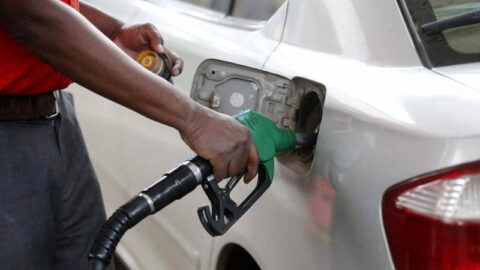
He says there is a “vented anger” to witnessing the pain and suffering while “the common person in the street in Australia is more concerned about what they’re paying in petrol”.
“There’s people dying for your petrol,” he says.
“When the prime minister gets up there and says, ‘we demand that the strait of Hormuz opens’, you’re demanding your petrol, but you’re not demanding that civilian lives are spared.”