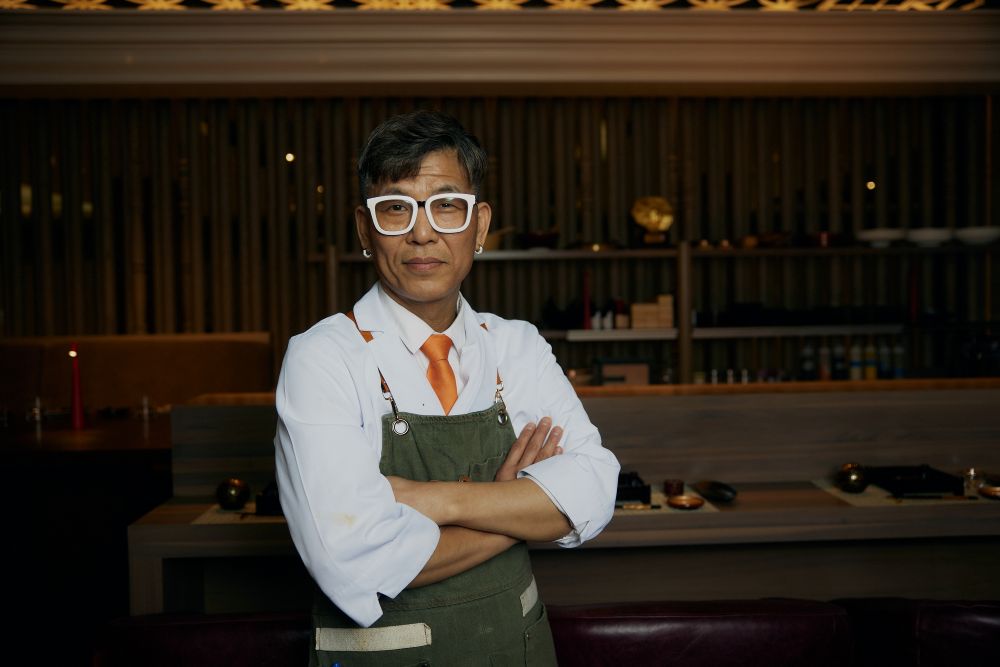
Chef Yi -Joo Na began his culinary career in South Korea at MBC, where he learned the foundations of television and radio and, during that time, developed a desire to experience life beyond home. That pull toward new cultures eventually brought him to Canada, shaping a cooking style influenced by the places he has lived and the flavours he has explored. Although inspired by many chefs through books and television, his greatest influence remains his mother, whose thoughtful approach to ingredients and family health shaped his understanding of food from a young age. We spoke with the executive sushi chef about the inspiration behind his craft, the global flavours that guide his cooking, and how Toronto’s dynamic culinary landscape continues to shape his menu choices.
What first inspired you to become a chef, and how has your journey led you to Toronto?
I started my career in South Korea at MBC, where I learned a lot about TV and radio. During that time, I became curious about the world and wanted to experience different cultures. That curiosity led me to move to Canada. When I first arrived in Vancouver, it was different from what I imagined. There were fewer people, and the cities felt less developed than I expected. After coming to Canada, I met a senior Japanese chef who introduced me to Japanese cuisine. His encouragement inspired me to become a chef. I travelled across Canada looking for a mentor, but Japanese food was not very popular at that time. I couldn’t find a chef who cooked the traditional style I had studied in books. So I decided to learn on my own. I bought cookbooks and practiced again and again to improve my skills. Canada’s diversity and the many possibilities in food made me want to become a chef. I believe food can bring people together and create happiness through one dish. Sharing my passion through food and continuing to grow still motivates me today. Most of all, cooking makes me truly happy. When I was young, I wanted to become a robotics engineer. But life led me in a different direction, and now I know the kitchen is the right place for me.
Who were some of your biggest influences, either chefs or family, in shaping your approach to cooking?
I have been inspired by many famous chefs through books and TV, but the person who influenced me the most is my mother. When I was a kid, I watched her carefully think about our family’s health and individual eating habits by choosing specific ingredients to cook our meals. She quietly took care of our family every day without asking for anything in return. I am also inspired by the small shop owners in local markets who serve simple, familiar food every day. They show up for hours and keep their promise to customers by being consistent and reliable. Even though my path is different from theirs, I am always touched by their dedication to their work. My cooking is rooted in comfort and familiarity, but I always try to learn and create something new. From all of these people, I have learned patience, hard work, and responsibility toward family and customers.
What’s the story behind your restaurant — how did it come to life?
Right now, I am in charge of the sushi program at Liberty Entertainment Group. I manage how it runs day to day and also help plan its future direction. The company mainly focuses on Italian food and steak, so working with sushi gives me both challenges and new opportunities to grow. Our team includes chefs with different backgrounds and experiences, and we work together and support each other. I believe that when we combine our strengths, we can offer more than just food to our guests. We can create a meaningful and memorable dining experience.
How does the food culture of Toronto influence your cooking style or menu choices?
I have been cooking Japanese food for over 30 years. During that time, I have also learned about many other types of cuisine, and I am still learning today. Canada, especially Toronto, is like a salad bowl where many different cultures live together, learn from one another, and respect their differences. I believe that to truly understand another culture’s food and traditions, you must respect the original style. That is why I do not focus on fusion food. Living in Toronto has taught me the importance of respecting tradition while sharing it in a way that connects people from different backgrounds. I keep the roots of my cooking strong, but I make small adjustments so new guests can enjoy it more easily. At the same time, I do not change the true taste or style of my food.
What’s one local ingredient you can’t live without in your kitchen?
Salt. It may seem simple, but salt has taught me about balance, strength, and timing. It is an ingredient that can turn something bland into something special.
If someone was visiting Toronto for the first time, what food experience would you insist they try?
I would tell them to explore the street food at Kensington Market. It is a lively neighbourhood where you can try food from many parts of the world, like Mexican tacos, Caribbean patties, Chinese dumplings, and Middle Eastern falafel. What makes it special is not only the different types of food, but also the people who make it. Each food stall has its own story. As you walk through the market, you can feel the mix of cultures that makes Toronto unique.
What restaurants, cafés, or hidden gems in Toronto do you personally love to eat at when you’re off-duty?
Didn’t we just meet? Maybe after a few more interviews!
How do you think the dining scene in Toronto is different from other Canadian cities?
When chefs decide to open a restaurant in Canada, many of them choose Toronto. One reason is that Toronto has the largest population in the country, so there are more people and more opportunities. Toronto is also very diverse. People from Europe, Asia, Africa, the Middle East, South America, and many other places live here. Because of this, the city is open to new ideas and different kinds of food. In my experience, Toronto’s dining scene is not just about one country’s traditional food. It is about diversity, creativity, and mixing different influences. Many cultures exist side by side, and this makes the food scene exciting and always changing.
Where do you like to shop for ingredients locally — farmers’ markets, specialty shops, or a particular supplier?
I buy over 70% of my ingredients from local suppliers across Canada. I try to support local businesses as much as possible. For seafood used in Japanese cooking, I buy from Toyosu Market in Japan through online auctions. The seafood is flown directly from Japan to Canada on Tuesdays, Wednesdays, and Fridays, so it stays fresh and high quality.
Beyond food, what makes Toronto special to you as a place to live and work?
First, Toronto has a large and growing population. I see it as a city full of opportunity and growth. It is very diverse, and people from many different cultures live and work together here. The city is always developing and moving forward. There is strong business activity and many chances to grow. I also value how people from different backgrounds learn from one another, support each other, and sometimes challenge each other to improve. To me, these experiences show the history and growth of the city. That is what makes Toronto a special place to live and work.
What’s next for you and your restaurant here?
I believe that you must first learn to care for yourself before you can truly care for others. I try to treat my customers with the same honesty and kindness that I expect from myself. In the future, I hope my restaurant becomes more than just a place to eat. I want it to feel warm and welcoming, like visiting family or a good neighbour. I hope every guest leaves with a good memory and wants to come back again.