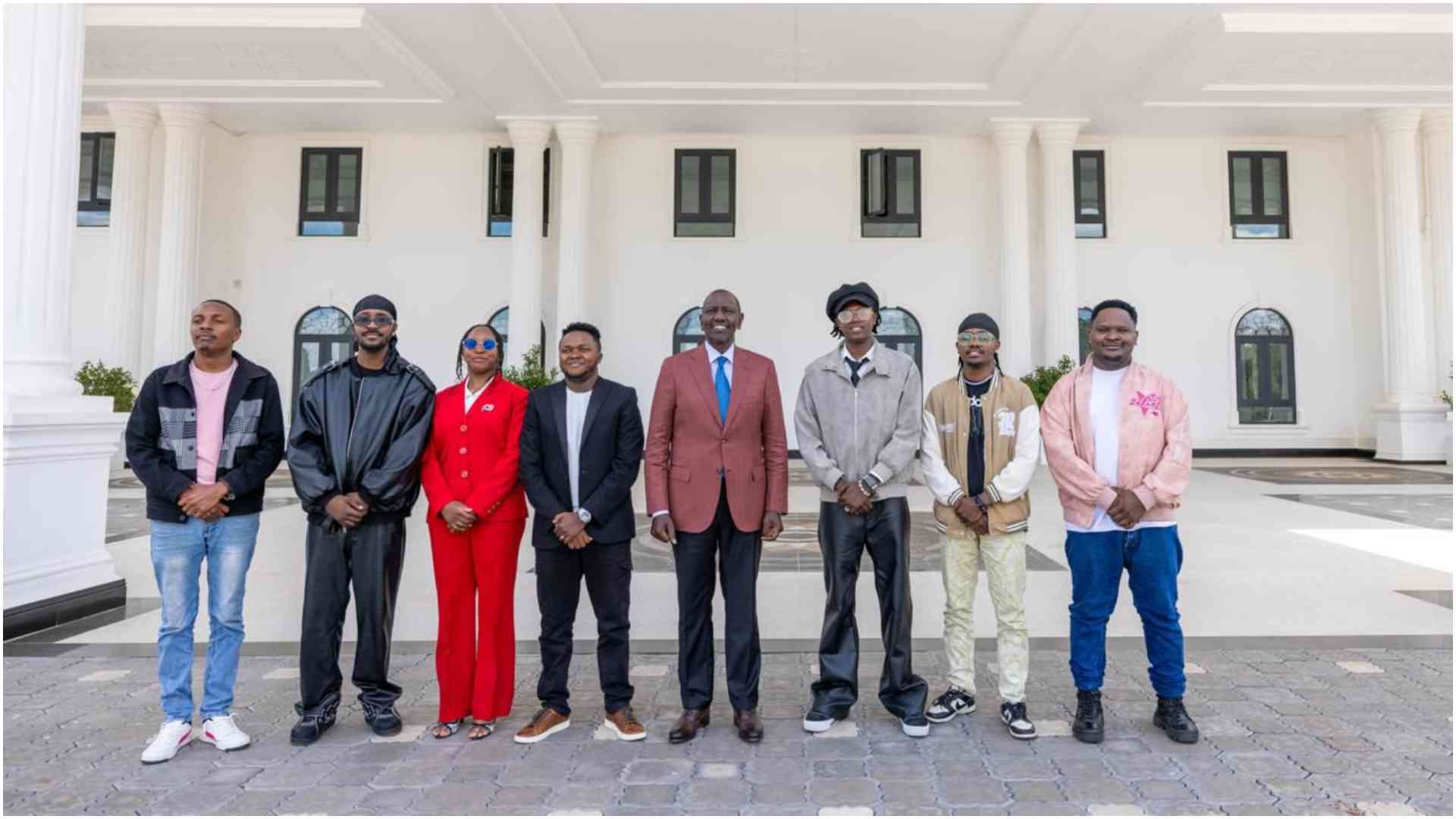
President William Ruto has pledged government intervention after Gengetone and Urbantone artists revealed they had lost rights to hundreds of their own songs.
During a meeting held on Wednesday, the creatives shared how they signed what they described as “questionable contracts with foreign entities,” only to later realise they had surrendered ownership of their music. The revelation paints a troubling picture of an industry where talent thrives, but protection often lags behind.
“They have lost over 700 songs, including ‘Sipangwingwi,’ the song that powered our conversations in 2022,” Ruto said, pointing to the magnitude of the loss and the cultural weight behind the music in question.
I met Gengetone and Urbantone artistes, who shared deeply troubling experiences regarding the loss of rights to their music due to questionable contracts with foreign entities.
They have lost over 700 songs, including ‘Sipangwingwi’, the song by Exray that powered our… pic.twitter.com/hu1MCA5PbX
— William Samoei Ruto, PhD (@WilliamsRuto) April 1, 2026
The president described the situation as regrettable, noting that many of the affected artists are young creatives who helped shape Kenya’s modern sound.
“I have facilitated legal support to ensure they are adequately represented in court,” he stated, signalling immediate action to help them fight for their rights.
For the artists, this intervention comes as both relief and recognition. For years, Kenya’s urban music scene especially Gengetone has dominated youth culture, producing chart-topping tracks and viral moments. Yet behind the success stories are contracts many did not fully understand, often signed in pursuit of quick breakthroughs.
Ruto emphasised that the government is not only responding to the current crisis but also working toward long-term solutions. “We have agreed on practical measures to safeguard their interests and ensure they receive fair reward for their work,” he said, highlighting the need for structural change.
At the centre of this transformation is the proposed Creative Economy Bill 2026, a piece of legislation designed to reshape how Kenya’s creative sector operates. The bill aims to regulate, standardise, and monetise the industry by introducing clear legal frameworks that protect intellectual property, ensure fair compensation, and create accountability within the system.
If implemented, the bill could transition the creative space from its current informal structure into a fully recognised economic sector. It seeks to provide financial, legal, and institutional support for content creators, musicians, and filmmakers ensuring that their work is not only protected but also profitable. This would mark a significant shift, positioning creativity as both a cultural force and a viable economic pillar.
“I have also asked the National Assembly, through the Majority Leader, to fast-track the Creative Economy Bill 2026 alongside critical copyright reforms,” Ruto said, confirming that Kimani Ichung’wah has been tasked with pushing the process forward. “These measures are necessary to protect our artistes, strengthen intellectual property rights, and secure the future of Kenya’s creative economy,” he added in his X statement.
Beyond legislation, the government is also introducing digital solutions to address longstanding issues in royalty collection. Ruto revealed that a new portal has been set up on the eCitizen platform to streamline royalty distribution and enhance transparency. “I also informed them that the government has established a digital portal on e-Citizen to aid royalty collection and distribution,” he noted.
The move signals a broader shift in how Kenya is beginning to value its creatives not just as entertainers, but as economic contributors whose work deserves protection and reward. For the artists who have already lost control of their music, the road ahead may involve legal battles. But with government backing and renewed focus on reform, there is hope that the future will look different.
What is unfolding is more than a policy response it is a moment of reckoning for an industry that has long operated without sufficient safeguards. And if these measures take hold, Kenya’s creative voices may finally gain what they have always deserved: ownership of their art and a fair share of its value.