Adlan Yousif explores deprivation through fragmented sculptures, rebuilding discarded materials into human figures.
His subjects are never whole. The bodies are deliberately incomplete, reflecting fragmentation both in material and lived experience.
The solo exhibition, Deprivation, runs from March 28 to April 19 at One Off Contemporary Art Gallery in Nairobi.
Working with iron and scrap metal, Yousif selects materials that were once useful before being cast aside. They carry traces of history, including rust, scratches and warps. Rather than impose form, he allows the materials to guide how they are used.
Transforming discarded materials into human figures mirrors people in conflict zones who are often marginalised and forgotten. By reconfiguring these fragments into human form, he restores their worth.

“By doing so, I’m saying that value isn’t nullified by neglect and that dignity can be restored even from the harshest of materials,” he says.
He describes the deprived person as living in a fragmented state, with a present body, an exhausted spirit, a full memory and an uncertain future. The fragmentation in his work reflects an inner state, a life that was not allowed to be complete.
Yousif grew up in an environment marked by scarcity, from material needs and security to childhood and the right to dream.
“Growing up in an unstable environment and witnessing loss at a young age led me to understand deprivation as a psychological state. This awareness accompanies me in every work,” he says.
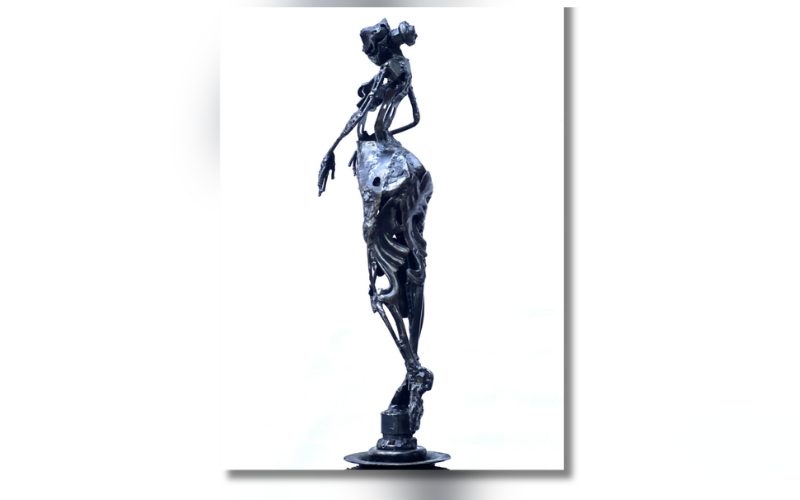
Approaching suffering from within, he preserves the dignity of his subjects while allowing space for contemplation. Viewers often begin in silence before engaging with the work.
“They tell me they felt uncomfortable, but they stayed in front of the work. What is the most important to me is that the viewer pauses and feels, even if they don’t find an answer,” he says.
In the exhibition, the loss of childhood is expressed through small bodies, incomplete poses and voids. These elements evoke absence, which he describes as the harshest form of deprivation.

The broken sculptures, he says, do not diminish dignity but reveal it. Dignity lies in the ability to remain human despite loss. In figures that stand while bent, he also conveys resilience.
Even as he tells painful stories, the works carry a quiet beauty. Yousif does not separate this beauty from suffering but uses it to draw viewers closer, inviting them to uncover the story beneath.
“I don’t speak for the people in war-torn areas. I wanted to create a space for them. Art doesn’t solve crises, but it prevents us from ignoring them. It keeps questions open and reminds us of our humanity when the world becomes cruel and quick to forget,” he says.