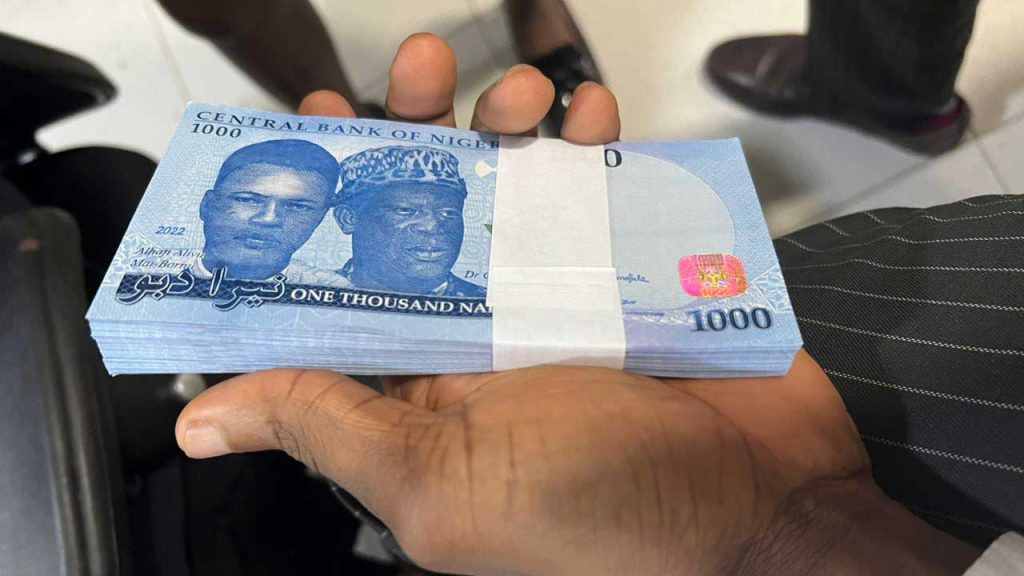
There is a number we carry every day. 1000 naira. It used to mean something. Not a fortune, not comfort, but enough to get through a moment. Enough to buy a meal, to move from one place to another, to solve a small problem without thinking too hard about it. Now, it hesitates in your hand. Because before you spend it, you already know it will not go far enough.

A thousand naira today cannot reliably buy a liter of fuel. It struggles to secure a proper meal. Sometimes, it cannot even carry you across the city. It exists in your pocket, but it no longer carries weight in your life. And that is where the real crisis begins. Because money is not just paper. It is trust. It is the quiet agreement between a person and the system that their effort will translate into something real. When that agreement starts to break, the problem is no longer inflation. It is something deeper, something more dangerous.
It is the erosion of meaning. You begin to notice it in small, almost forgettable moments. At the fuel station, when you pause before speaking, mentally adjusting what you planned to buy.
At a food stall, when you ask what your money can get instead of what you actually want. In the market, when you start choosing what to leave behind instead of what to take home.
These are not dramatic moments. That is precisely why they matter. Because they are happening quietly, everywhere, all at once. And even more troubling, they are becoming normal.
That is how decline settles in. Not through collapse, but through adjustment. People complain, then adapt. They stretch, they substitute, they manage. Nigerians are remarkably good at this.
But every adjustment comes at a cost. A little convenience disappears. A little dignity erodes. A little expectation is lowered. Until one day, what should have been unacceptable feels routine.
This is the paradox we are living through. A country rich in resources, rich in talent, rich in global cultural influence, yet increasingly unable to guarantee the basics to its own people. We export music that fills arenas, films that travel continents, ideas that shape conversations. And yet, at home, too many people are calculating whether they can afford to eat or move.
It is not just ironic. It is revealing. Because it tells us that national wealth, in itself, means very little if it does not translate into everyday life. A country can be rich on paper and poor in practice at the same time. And right now, that gap is widening. The truth is uncomfortable, but it is simple. Money that cannot reliably meet basic needs is no longer functioning as money. It becomes symbolic. It exists, but it does not serve. It promises, but it does not deliver. And when that happens, something else begins to shift.
People stop planning forward. They start thinking in shorter cycles. They spend quickly because holding money feels pointless. They focus on getting through the day, not building for the future.
It is subtle, but it changes everything. Because a society that lives like that does not just struggle economically. It begins to shrink psychologically. Ambition narrows. Risk-taking declines. The future feels distant, abstract, uncertain. And a country cannot grow that way.
We often speak about resilience as if it is purely a strength. And in many ways, it is. Nigerians endure, adapt, survive in ways that are genuinely remarkable.
But resilience also has a darker side. It can normalize what should never be normal. It can make people accept less than they deserve, simply because they have learned how to cope.
And that is where the real danger lies. Because when people stop expecting the system to work, the system no longer feels any pressure to improve. So the question before us is not just economic.
It is fundamental. What is the value of work in a country where earnings cannot secure the basics of living?
What does growth mean if it is not felt in the hands of ordinary people?
What is a currency worth if it cannot carry the weight of the life behind it?
At some point, these questions stop being theoretical. They become daily reality. Money is not just what we spend. It is what we trust to carry our lives. A currency does not fail when it loses value. It fails when it loses meaning. A thousand naira exists. But it no longer feeds, no longer moves, no longer solves even the smallest problems with certainty. And when a society reaches that point, it is no longer just dealing with high prices. It is also confronting a quiet breakdown in the relationship between effort and reward. We can survive it. We will, because we always do.
But survival is not the same as progress. And a country that remains in survival mode for too long risks forgetting what progress even looks like. Because in the end, the issue is not complicated.
If the highest note in your pocket cannot reliably sustain you, then something fundamental is broken. And when that happens, the problem is no longer poverty in the way we have always understood it. It becomes something quieter, more dangerous. A loss of meaning. A loss of trust. A slow unravelling of the idea that effort should lead to survival.
A country can endure many things. Scarcity. hardship. even inequality. But when its money stops meaning anything, what begins to disappear is not just value. It is belief. And once belief goes, everything else follows.
The post Our highest note cannot buy you a meal, by Stephanie Shaakaa appeared first on Vanguard News.