The words our children are learning come from power.
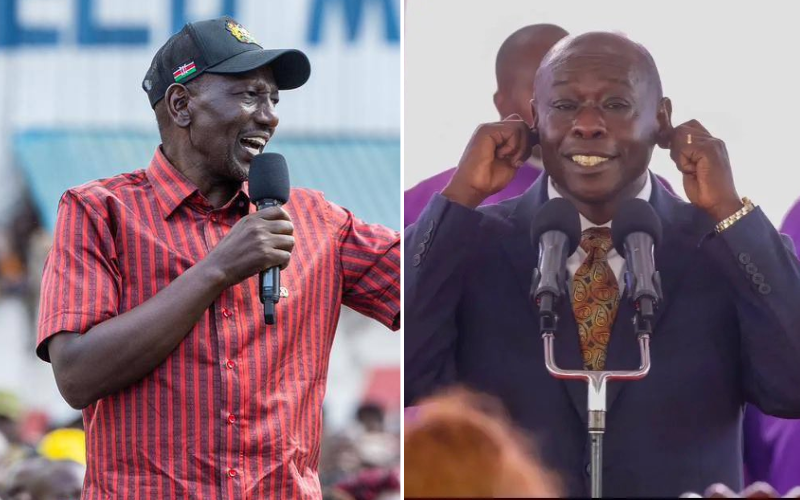
Over the past week, Kenyans have been “entertained” in the most cringeworthy way, with top political leaders sinking to insults, body-shaming, and other irresponsible remarks.
And children are watching, quietly listening, quietly learning from the country’s most powerful voices.
“Children are natural imitators, and long before they understand politics, they understand tone, emotion, and intention. When a leader speaks, a child does not hear ‘politics’; they hear permission to speak loudly, to insult, and to dismiss,” says Dan Odhiambo, a Nairobi-based child psychologist.
He explains that the language of power becomes the language of the playground, and what begins in the public square does not stay there.
“It travels quietly, and quickly, into classrooms, playgrounds, and school corridors,” he says.
Catherine Mugendi, a guidance and counselling teacher, adds that when harsh words become normal, children struggle to step back. “They don’t want to say ‘sorry.’ Pride takes over, and empathy reduces. This is how culture shifts, not through policy, but through repetition,” she says.
“If younger children imitate, teenagers interpret, and what they are interpreting is complex,” Catherine notes.
Between admiration and discomfort, many teenagers are forming their own definitions of power, respect, and leadership.
And yet, within that confusion lies possibility, because teenagers are not just absorbing, they are questioning.
With guidance, Odhiambo says, children can learn to separate confidence from arrogance, honesty from insult, leadership from noise. “Words are not just sounds. They carry identity, and they shape dignity.”
He explains that when powerful people use language that belittles, humiliates, or dismisses, children absorb more than vocabulary—they absorb values about human worth.
“Children build their sense of identity from the language around them. If public speech normalises disrespect, children begin to see disrespect as acceptable, and sometimes even as strength,” the psychologist explains.
There is also a deeper, quieter shift taking place.
Repeated exposure to harsh, aggressive language can shape how children process conflict itself. Over time, raised voices and sharp words begin to feel normal. Mugendi says calm conversation, by contrast, can start to feel ineffective and weak.
“This is how language rewires perception. It influences how children argue, how they express frustration, how they interpret disagreement, and ultimately how they see themselves in relation to others. Language does not only teach children how to speak; it teaches them how to value people,” says the family coach.
Odhiambo outlines the quiet work of parenting in a noisy world: “Not by shielding children completely, but by interpreting the world for them, by naming what is wrong, modelling what is right, and holding a line even when the world blurs it.”