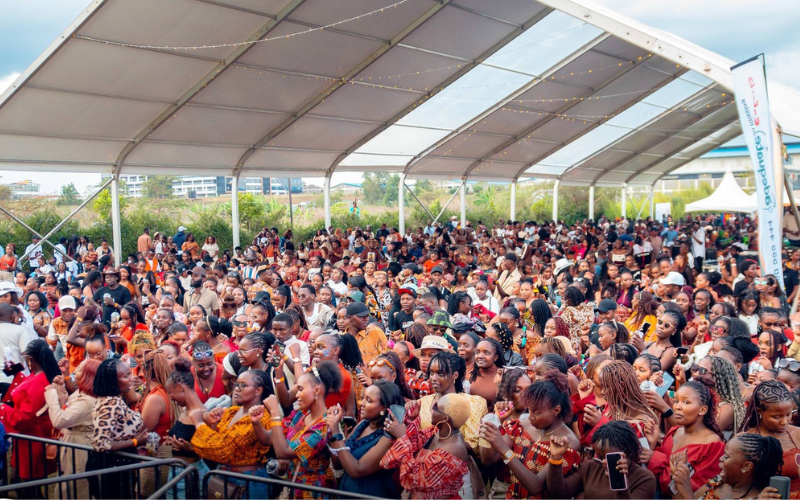
Footage from a Kikuyu cultural event dubbed Mataha Festival has ignited debate online after it emerged that women outnumbered men at the gathering.
In a viral video seen by TNX Africa, most of the dancing revellers were visibly women, dressed for the occasion and moving energetically to the music as the emcee cheered them on.
However, scenes from the clip sparked conversation about male attendance, with many online attempting to decode the apparent imbalance.
“Just see how women are truly happy and carefree when there are no men around,” chimed one woman on X.
“Women are the new economy movers. Women have unlimited opportunities to resources, while we(men) have limited chances to resources and unlimited expenditure,” wrote another on Facebook.
Fellow localmen, what happened? pic.twitter.com/RruZxPaTIA
— Goddie (@Goddie_Ke) March 1, 2026
Kamau Waruhiu wrote on X, “There is nothing wrong with women being the majority in Mataha Festival. The whole thing should be a women’s only affair. Any man screaming and putting his hands up like he doesn’t care should be whopped hapo Kenya archives.”
Another user, Millicent, added, “Lakini watu hutaka kuteta tu. Wanasemanga ooh wamama hawaezi jipeleka events. Sasa wamejipeleka bado wanateta. (Going by the responses I’ve seen).”
Others attributed the turnout to high entry fees, expensive food and drinks, or suggested that some men preferred cheaper entertainment spots to watch football or attend to business.
Mataha Festival is described as an annual cultural celebration in Kenya that honours Kikuyu heritage by blending ancient traditions with modern creativity.
The name “Mataha” is a symbolic term in Kikuyu identity, representing unity, celebration and community spirit.
However, the issue of male attendance is not new.
In 2025, Sandra Shiku’s viral Facebook post about the Mataha Festival in Kiambu claimed that nearly 70 per cent of attendees were women.
Her observation triggered nationwide debate, with many linking the trend to economic strain, social pressure and shifting priorities among men.
According to PCMA research, women are more likely to attend events because they value relationship building, networking and self-improvement.
Men, on the other hand, often prioritise work or professional obligations and may feel less compelled to participate in social or community gatherings.
Similar patterns have been observed at other Kikuyu events, including the Ngemi Festival.