Iranian Australia community members have expressed distress after a small number of mosques and Islamic centres in Melbourne and Sydney invited members to mourn the death of Iran’s supreme leader.
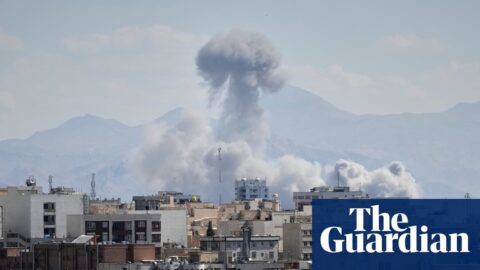
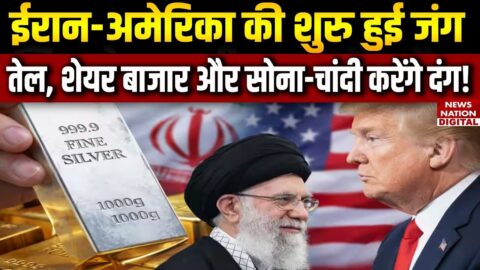
Iranian state media on Sunday confirmed the death of the country’s supreme leader, Ayatollah Ali Khamenei, 86, after Israel and the US launched strikes on the country, plunging the Middle East into a volatile conflict.
Khamenei was the commander-in-chief of the Iranian armed forces, which includes the army and the Islamic Revolutionary Guard Corps (IRGC) – proscribed in Australia as a state sponsor of terrorism.
Guardian Australia has viewed social media posts and screenshots from five Shia Muslim mosques and Islamic centres in Sydney and Melbourne hosting memorials for the supreme leader. Some began holding majlis, or special sittings, for three nights from Sunday.
In Melbourne, the El Zahra Islamic community centre, a Shia Islamic centre, hosted a memorial on Sunday evening. A mosque representative told Guardian Australia the majlis was for the “respected scholar of the Islamic faith who was murdered yesterday”.
Sign up: AU Breaking News email
The NSW premier, Chris Minns, described the vigils as “atrocious”.
“By an objective measure, the Ayatollah was evil, and I don’t think that we should be mincing words about this. The truth of the matter is, weeks ago, he and his regime were responsible for killing 30,000 protesters … for simply demonstrating against the regime and their brutal practice,” he said.
Members of Australia’s Iranian diaspora expressed distress at the vigils.
“Seeing this kind of vigil for a terrorist is actually bringing up a lot of trauma back into our community,” Dr Rana Dadpour, founder of advocacy group AusIran, said.
“He’s responsible for killing tens of thousands of people, including my own family and friends.”
Nos Hosseini from the Iranian Women’s Association said it was concerning there were small parts of the community who were mourning the death of a person who was responsible for the “brutality unleashed across the world”.
“He leaves behind a legacy that’s tainted with the blood of his victims and his institution’s victims. We will never see him face the full force of law for his crimes against humanity,” she said.
“It’s a huge slap in the face to the Iranian community, who have either fled from this dictatorship that he was at the helm of, or had loved ones that fell victim to such a brutal reign of terror during his his time as supreme leader,” she said.
On Sunday, thousands of Iranian Australians attended celebratory events to mark Khamenei’s death.
The Shia Muslim Council of Australia said Iran holds “profound religious significance” for its community, many of whom sought refuge there before settling in Australia.
“Ayatollah Sayyid Ali Khamenei, irrespective of political interpretation, has been regarded by millions of Shia Muslims worldwide as a senior religious authority and spiritual guide,” council directors Ali Alsamail and Julie Karaki said in a joint statement.
“His death is being mourned across Iran, throughout the Middle East, and within diaspora communities, including here in Australia. For many, this is a religious and communal loss.
“Whatever one’s political position, acknowledging grief is not an endorsement of policy. It is a recognition of humanity. Our community’s mourning deserves to be understood in that light.”
Alsamail and Karaki said the strikes in the Middle East had triggered “real fear, anxiety and grief” for Australia’s Shia Muslim community who were worried for loves ones abroad.
Dr Rateb Jneid, president of the Australian Federation of Islamic Councils, said it supported the right of Muslims to “meet their religious obligations peacefully and lawfully, as is afforded to all faith communities in Australia”.
“In Islam, funeral prayers are a religious obligation performed for any deceased Muslim. This is a matter of faith and ritual, not a political endorsement. If members of the Shia community in Australia are holding funeral prayers, that is a standard and non-controversial religious practice observed across Muslim communities worldwide,” he said in a statement.
Khamenei came to power in 1989, succeeding Ayatollah Ruhollah Khomeini, the founder of the Islamic Republic.
Despite being viewed by some in the global Shia Muslim community as a rejection of western-imposed systems of government, Prof Shahram Akbarzadeh, director of the Middle East Studies Forum at Deakin University, said the Iranian regime had “pushed people away from religion”.
“People detest religion in Iran, detest Islam because it is shoved down the throat by the government,” he said.
Akbarzadeh said some Shia Muslims around the world “see the supreme leader as their mentor, as their role model, as their guide”.
“They’re looking at Khamenei as a religious scholar and a symbol of resistance against the west. For the Iranians, Khamenei is a symbol of state despotism and dictatorship.”
Last November, Australia listed the IRGC as a state sponsor of terrorism, following revelations from security agencies that the Iranian government ordered at least two antisemitic attacks in Australia – a fire bombing attack on the Adass Israel Synagogue in Melbourne and an arson attack on Lewis’s Continental Kitchen in Sydney.