The Queer Barber is a QTBIPOC-owned, gender-affirming barbershop in Toronto’s east end, founded by Erica “E” Cuevas, offering trauma-informed haircuts rooted in social-work principles. Operating from an intimate private studio, the business prioritizes safety, accessibility, and community care through gender-neutral pricing and a Pay-What-You-Can model. Designed for queer, trans, and gender-diverse clients, it reframes grooming as an affirming, collaborative experience grounded in dignity and trust.
Who is answering the questions and what is their position?
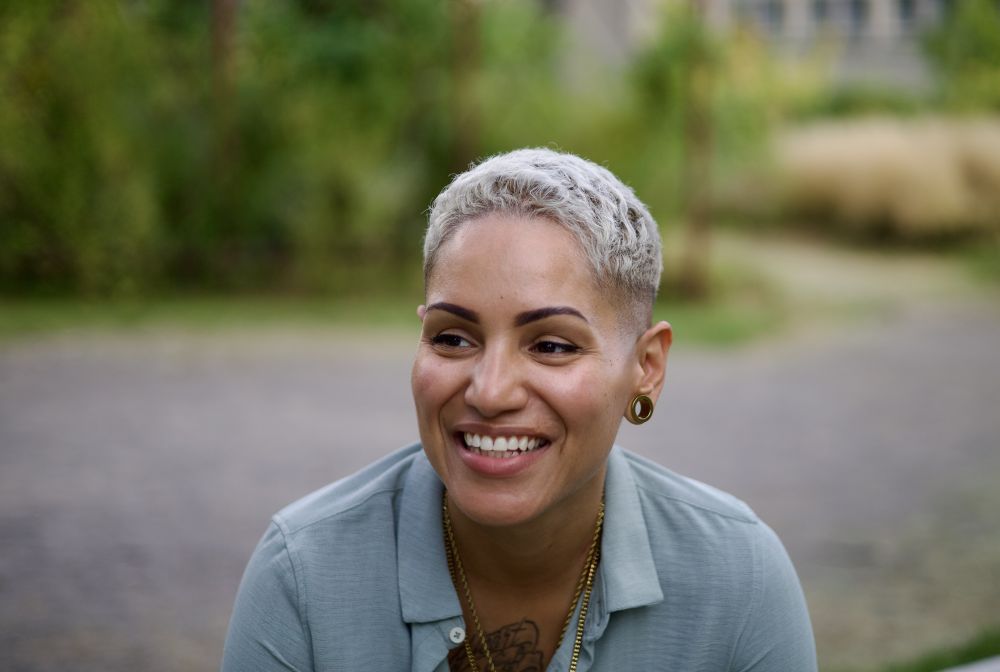
My name is Erica “E” Cuevas (all pronouns), and I am the founder and gender-affirming barber at The Queer Barber. I am also a Master of Social Work candidate.
What is your business called and what does it do?
My business is called The Queer Barber. I offer gender-affirming haircuts and styles through a trauma-informed, social-work-informed approach. My space is QTBIPOC-owned and created intentionally as a safe, accessible, and community-focused environment where queer, trans, and gender-diverse clients can feel seen, respected, and celebrated.
What made you want to do this work?
I’ve been a barber for years, and throughout that time I witnessed how deeply haircuts are tied to identity, safety, and mental health, especially for queer and trans people. I saw how traditional barbershops and salons often failed my community through misgendering, lack of cultural understanding, or simply not knowing how to hold space. I built The Queer Barber to change that narrative and offer a space where affirmation and cultural understanding are core parts of the service.
As The Queer Barber grew, I realized that the emotional labour happening in the chair, the stories, the vulnerability, the trust, was actually a form of frontline community care. That understanding is what guided me into my Master of Social Work. My MSW is giving me the tools to deepen the work: grounding my practice in trauma-informed care, anti-oppressive principles, and mental-health frameworks.
I chose this work because grooming isn’t just a service; it’s a space where people deserve to feel seen, affirmed, and safe.
What problem did you want to solve with the business?
I wanted to address several gaps I saw every day:
1. A lack of trauma-informed, gender-affirming grooming spaces: Traditional barbershops and salons often don’t understand the nuances of pronouns, presentation, dysphoria, cultural identity, or consent around touch.
2. Barriers to mental-health-supportive spaces: A haircut can be a moment of grounding or a moment of vulnerability. I wanted to create a place where people feel emotionally safe and empowered in their self-expression.
3. Financial barriers to care: Through my Pay-What-You-Can program, I apply social-work values of accessibility and equity so everyone can show up as their best self, regardless of income.
The goal was to build a community-owned solution that blended grooming, care, and dignity.
Who are your clientele/demographics?
My clientele is mostly QTBIPOC and 2SLGBTQIA+ individuals and allies who want a haircut experience that is affirming, collaborative, and culturally aware. Many clients are exploring gender expression, transitioning, healing from negative salon/barbershop experiences, or looking for someone who understands the emotional layers of identity presentation.
How does your business make money? How does it work?
The Queer Barber operates by appointment only, offering haircutting services using a gender-neutral pricing model rooted in equity, not assumptions about identity.
My Pay-What-You-Can program is built on social-work principles of accessibility, and is supported by clients who choose to pay full price or above.
It’s a community model that sustains itself through shared care, not gatekeeping.
Where in the city can we find your profession?
I’m located in Toronto’s east end, working out of a private studio inside an aesthetic salon. The Queer Barber isn’t a traditional barbershop; it’s a one-chair space that’s intentionally intimate, designed to reduce anxiety, allow for privacy, and create the kind of environment where trust can be built. It’s a quiet, comfortable setting where clients can come as they are and feel fully supported.
What is the best question a prospective customer could ask a member of your profession when comparing services? Give the answer as well.
“How do you approach haircuts for people whose identities don’t fit into traditional gendered categories?”
A truly inclusive barber should focus on listening, collaboration, and identity-affirming technique, not outdated gender norms.
A haircut should reflect who you are, not “men’s” or “women’s” styles.
Ask for someone who prioritizes safety, consent, and communication at every step.
What is the best part about what you do? What is the worst part?
Best part: Watching someone see themselves in the mirror, sometimes for the first time, after a gender-affirming cut, and witnessing the emotional shift that follows, is one of the most powerful parts of this work.
Worst part: Seeing how many people have been hurt, dismissed, or made unsafe in previous haircutting experiences. It motivates me, but it’s a reminder of how necessary affirming spaces still are.
What is your favourite joke about your own profession?
Barbers are basically therapists with clippers.
Where can we follow you?
PAY IT FORWARD: What is another local business that you love?
I love supporting Toronto Queer Market, a beautiful community market that uplifts QTBIPOC and 2SLGBTQIA+ makers, artists, and small businesses across the city.
The post Homegrown Business: Erica “E” Cuevas of The Queer Barber appeared first on Toronto Guardian.