
Let’s be honest:
If you haven’t rebuilt your 2026 marketing plan from scratch, it’s already out of date.
The cannabis consumer has changed dramatically — even compared to last year. They’re shopping like they buy skincare, not flower. They expect personalized recommendations, trust founder-led brands, and gravitate toward discreet formats like edibles and THC beverages.

This isn’t a tweak-your-messaging moment. It’s a full strategy reset.
Here’s what the new consumer wants — and how brands can meet them where they actually live.
It all starts with the biggest shift driving the entire market: the rise of cannabis as a wellness staple rather than a recreational escape.
Wellness is redefining the cannabis consumer
The stereotype of cannabis as a party drug is officially dead. Today’s consumers are reaching for cannabis products the way they once reached for melatonin, ibuprofen, or a glass of wine after a stressful day. Sixty-four percent of consumers cite relaxation as their primary motivation, according to Brightfield Group, while 30 percent now prefer cannabis over alcohol entirely.
64 percent of consumers now say relaxation — not intoxication — is their primary reason for using cannabis, underscoring the category’s shift toward wellness-driven demand.
“Consumers are leaning into cannabis for wellness,” said Anne Donohoe, managing director at KCSA Strategic Communications. “Sleep, stress, and pain-management are top drivers. Interest in minor cannabinoids like CBN, CBG, and THCV is growing.”
The data bears this out: One-fifth of Dry January participants this year swapped alcohol for THC or CBD products, with Gen Z and millennials leading the charge. One in three people in those age demographics now regularly choose THC beverages at happy hours. In Canada, 70 percent of adults support federal investment in cannabis wellness research.
For marketers, this shift demands a complete messaging overhaul. “The rise of microdosing, edibles, and tinctures for specific uses means marketers should position products not just for recreation, but as a tool for achieving a specific outcome,” advised Dan Serard, senior vice president at Cannabis Creative Group.
Demographics have shifted — and so must your messaging
If your target demographic is still young men, you’re marketing to yesterday’s consumer. Women now compose more than half of cannabis users, according to Headset, and they skew toward wellness products, with 29 percent preferring non-flower formats like topicals and edibles.
Women now account for more than half of cannabis consumers, while millennials and Gen Z together drive 63 percent of total U.S. cannabis spending.
Millennials capture 46 percent of U.S. spending, while Gen Z and millennials together drive 63 percent of total sales. Middle-aged adults (35–54) increasingly identify as cannabis consumers as legalization and normalization reduce stigma. Among younger demographics, 59 percent of female consumers under age 35 report planning to increase their use of cannabis products.
“Cannabis is no longer the new kid on the block, and that means consumers are more intelligent than when the market first opened up,” Serard said. “They’re informed and have specific demands related to their individual goals. Companies should be paying attention to these new personas and tailoring their messaging accordingly.”
Science-backed buying is the new baseline
The days of marketing based solely on THC percentage are over. Today’s educated consumers seek products engineered for specific effects rather than just maximum potency; consequently, they want to understand the full cannabinoid and terpene profile.
Four in ten consumers now use CBD products, reflecting growing interest in cannabinoids, terpene profiles, and outcome-based shopping.
“Consumers are past focusing solely on THC percentage,” Serard said. “They are increasingly interested in the minor cannabinoids, terpenes, and the effects they produce. Marketing needs to be more educational, detailed, and science-backed.”
This sophistication extends to sourcing and quality. According to Nielsen IQ, 40 percent of consumers opt for CBD variants, and demand is spiking for premium, terpene-rich buds from living soil versus synthetic growing methods. Consumers are rejecting mediocre products in favor of flavorful, residue-free options that emphasize sustainability and organic sourcing.
Formats are diversifying faster than brands can adapt
A Statista analysis revealed that while 21 percent of consumers still prefer flower, the market is fracturing across categories. Edibles claim 16 percent of consumer preference, vapes and cartridges 15 percent, and pre-rolls 13 percent. Pre-roll sales jumped 12 percent this year to reach $4.1 billion, and beverages surged 11 percent to $54 million.
Flower represents just 21 percent of stated consumer preference, as edibles, vapes, pre-rolls, and beverages continue to gain share.
“Product preferences are shifting from smoking toward gummies, beverages, and other discreet formats,” Donohoe observed. The convenience and discretion of these formats align perfectly with wellness-focused consumption patterns.
Infused beverages represent a particularly interesting opportunity, with mainstream retailers like Target now test-marketing hemp-derived THC drinks in select Minnesota stores — a significant signal of growing mainstream acceptance. As normalization continues, expect the lines between cannabis and conventional wellness products to blur further.
Digital-first shopping is now the default
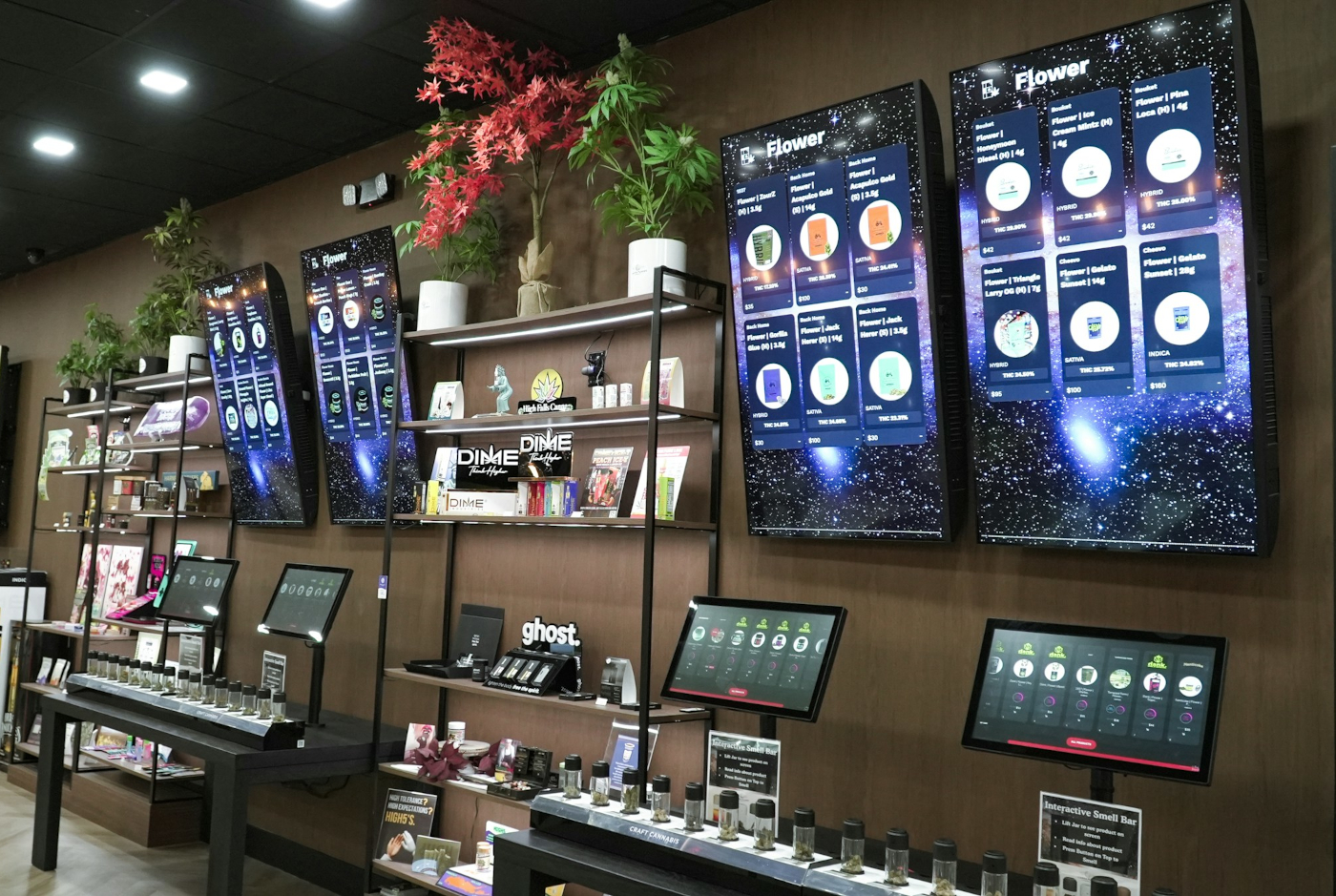
Today’s cannabis consumer shops like they’re buying groceries on Amazon, not visiting a specialty store. Seventy-nine percent of Americans now live near dispensaries, but proximity isn’t enough. Sixty-eight percent demand clear online menus, 67 percent expect delivery options, and 75 percent want one-click reordering capabilities, according to a Sweed survey.
68 percent of consumers expect clear online menus before visiting a dispensary, and 75 percent say easy reordering influences where they shop.
“Consumers are shopping digitally,” confirmed Eric Meth, chief innovation officer at Surfside. “The purchase journey now often begins online, even when the transaction ends in-store. In some markets, up to 60 percent of cannabis purchases are happening through e-commerce channels.”
The payoff for getting this right is substantial: According to Flowhub, dispensaries offering debit payment see 59 percent more transactions and generate $4,600 more in daily revenue compared to cash-only operations. Loyalty programs retain 69 percent of users, while word-of-mouth and local search-engine optimization drive 41 percent of new customer discovery.
But convenience alone isn’t enough. Half of consumers feel overwhelmed by product choices, and 57 percent won’t return to a dispensary or website if they experience inconsistent recommendations. This is where personalization becomes critical.
Personalization is no longer optional
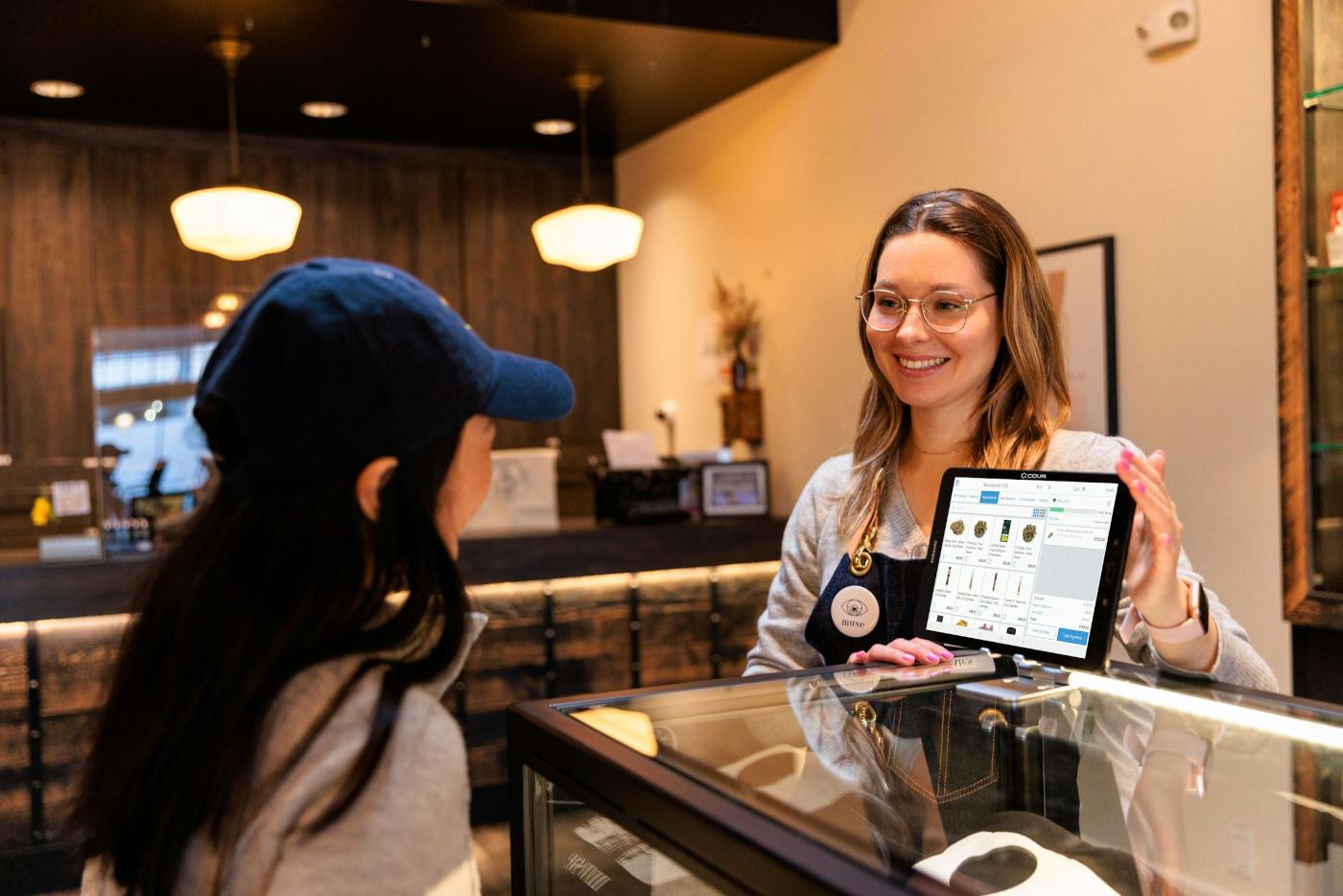
Generic marketing no longer moves the needle. Nearly nine in ten consumers return to brands that offer tailored recommendations, while surveys suggest more than half of digital-native Gen Z expect dynamic, behavior-based offers. Yet only 29 percent across the board feel they currently receive either experience.
Nearly nine in ten consumers say they’re more likely to return to brands that offer personalized recommendations — yet only 29 percent feel they currently receive them.
“Every dispensary serves a specific consumer base, whether it is neighborhood regulars or tourists,” said Shawna Seldon McGregor, founder of Maverick Public Relations. “Understanding what drives people to a store and why they purchase certain products is crucial. This is where PR comes in: How are you tracking and responding to that data?”
The stakes are high: One-third of customer churn can be traced to irrelevant outreach. Customers who feel “seen” are more likely to reward brands and retailers with loyalty. Operators who deploy artificial-intelligence-powered recommendation engines and mood-based product matching can reduce the friction. Nearly two-thirds of consumers cite post-purchase education as a key influence on loyalty, offering another opportunity for personalized, value-added engagement.
“Consumers expect brands to reflect their values, from sustainability to social impact, and they reward transparency,” McGregor said.
Authenticity and founder-led storytelling win attention
In an increasingly commoditized market, consumers are seeking genuine connections with the brands they support. This trend cuts against the consolidation happening among the top five brand houses, which now control 14 percent more market share than previously.
“Founder-led brands, both business-to-business and business-to-consumer, are more powerful now than ever before,” said Michael Mejer, founder and chief executive officer at Greenlane Communication. “People don’t want to buy from a company; they want to know who they’re buying from and buying into with their hard-earned money.”
This extends to how brands show up in consumers’ feeds and social channels. Micro-influencers and niche social platforms are capturing attention with organic content, while experiential marketing — virtual-reality strain tours, pop-up festivals, cannabis lounges — builds loyalty and normalizes use in social settings.
“Experience-based consumption, such as lounges, is gaining traction,” Donohoe said, “signaling that consumers are looking for cannabis to fit into lifestyle and social settings.”
Attention is splintering across platforms
Traditional marketing playbooks are struggling to keep pace with rapidly evolving consumer attention patterns. The digital landscape is becoming more complex, with new platforms and purchasing mechanisms frequently emerging.
“Attention spans are getting shorter and more fragmented,” warned Brandon Bobart, founder of Pisgah Peaks Ventures. “People are into social shopping via TikTok Shop. OpenAI just announced Etsy and Shopify one-click purchase ability in their chat search results, which further complicates things.”
For brands operating under advertising restrictions, this fragmentation presents both challenges and opportunities. Earned media, influencer partnerships, and content marketing become even more critical when you can’t simply buy your way into consumer consciousness through traditional advertising channels.
Usage patterns reveal long-term market growth
Normalization is reflected in consumption frequency: Daily or near-daily use has increased sevenfold since 2000, reaching 17.7 million Americans according to a Carnegie Mellon University study. Among new users, half consume five or more days per week — a rate far higher than comparable alcohol data indicates.
This isn’t just about getting high more often. Thirty-nine percent of consumers share cannabis with friends and family during holidays, integrating the plant into social rituals previously dominated by alcohol. Legalization has embedded cannabis into daily routines, creating opportunities for brands that can nurture product loyalty through automated reorder flows and subscription models.
What this means for your strategy
Taken together, these trends paint a clear picture: The 2026 cannabis consumer has leveled up — fast. The brands that thrive next year won’t be the ones making incremental tweaks. They’ll be the ones willing to rethink their approach from the ground up.
Here’s how to align your strategy with what buyers actually expect.
What operators must do for 2026
Lead with wellness positioning and functional benefits
Recreation and potency are no longer the best hooks. Educational, science-backed marketing that helps consumers achieve specific outcomes — better sleep, reduced anxiety, enhanced focus — will resonate far more than generic “premium quality” messaging.
Invest in personalization and data infrastructure
The 45 percent of consumers who say they’d shop more with personalized recommendations aren’t asking for much, but delivering on that expectation requires integrated data systems that connect online behavior, purchase history, and in-store interactions.
Build authentic, founder-forward brand identities
Communicate values and create genuine connections. In a commoditized market, story and purpose differentiate as much as product quality.
Optimize for digital-first discovery and shopping
Discovery starts online, even when final transactions happen in physical locations. An online presence isn’t marketing anymore. It’s the primary research and consideration phase of the customer journey.
Meet consumers where their attention actually is
Think micro-influencer partnerships, social commerce platforms, experiential activations, and earned media that builds credibility without triggering advertising restrictions.
The cannabis industry’s adolescence is over. The brands that thrive in this mature market will be those that understand their consumers as complex, informed wellness seekers rather than one-dimensional stoners and build every aspect of their marketing and PR strategies accordingly.
The 2026 Marketing Cheat Sheet
Quick, data-backed answers to the biggest strategy questions operators are asking heading into 2026.
-
What are the biggest cannabis marketing trends for 2026?
The largest shifts include wellness-driven purchasing, the rise of discreet formats, science-backed product education, digital-first shopping, personalization, and a growing preference for founder-led brands. These trends reflect a more informed, mainstream consumer.
-
How is the 2026 cannabis consumer different?
Consumers are older, more wellness-focused, more female, and significantly more digitally savvy. They expect transparency, tailored recommendations, simple workflows, and educational content that guides product choice.
-
What marketing strategies should cannabis brands prioritize in 2026?
Brands should invest in personalization, build strong data infrastructure, embrace science-forward messaging, optimize digital shopping experiences, and strengthen founder-led storytelling. Earned media and experiential events also matter more than ever.
-
Which product categories will see fastest growth in 2026?
Edibles, infused beverages, and pre-rolls continue to outpace traditional flower. Beverages in particular are showing rapid growth as mainstream retailers begin experimenting with THC product placement.
-
Why is personalization critical for cannabis marketing in 2026?
More than half of consumers say they expect tailored recommendations, yet few brands deliver. Personalization removes choice paralysis, improves loyalty, and directly reduces customer churn.